
With the widespread use of digital cameras and the recent progress in smartphone photography, ten of thousands of pictures are taken everyday in the temples of Angkor. We take the ability to take pictures granted but often forget that the first photographs of the temples of Angkor were taken more than 150 years ago!
Photographers back then were using one of the first photographic process created called wet plate collodion. They had porters to carry their darkroom and chemicals as photographic plates needed to be developed on site. In top of that, access to the temples of Angkor were very difficult as they were still covered by a dense jungle….
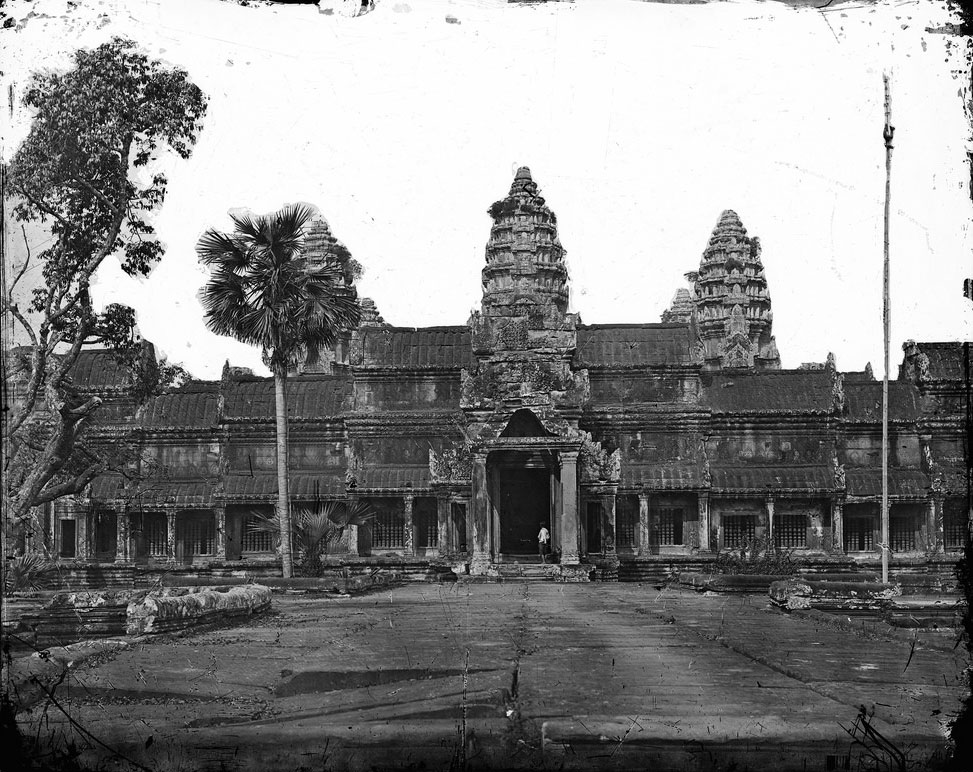
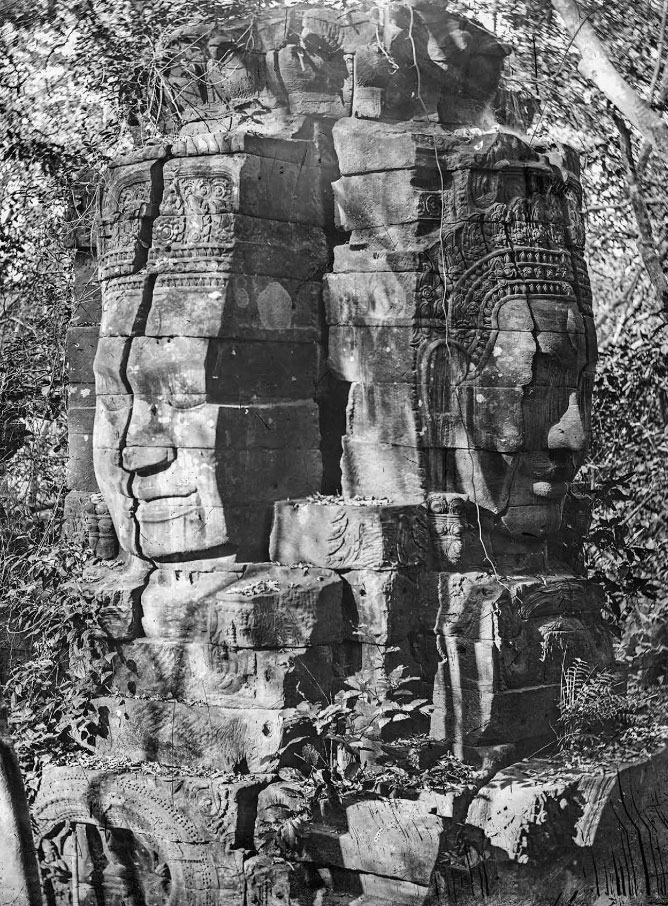
Two photographers were credited for successfully captured the first pictures of Angkor. The first one, was a Scottish Photographer named John Thomson, who was 29 years old and based in Singapore. He did an extensive photographic work during his two weeks spent in Angkor in 1866. John Thomson was inspired to take this trip by the writings of Henri Mouhot in 1860. Beside Angkor Wat, Thomson took pictures of Angkor Thom and Bayon which were covered by a dense jungle. It was only in 1911, that Jean Commaille lead an archeology mission from École française d’Extrême-Orient to clear up the trees in Bayon temple and started restorations.
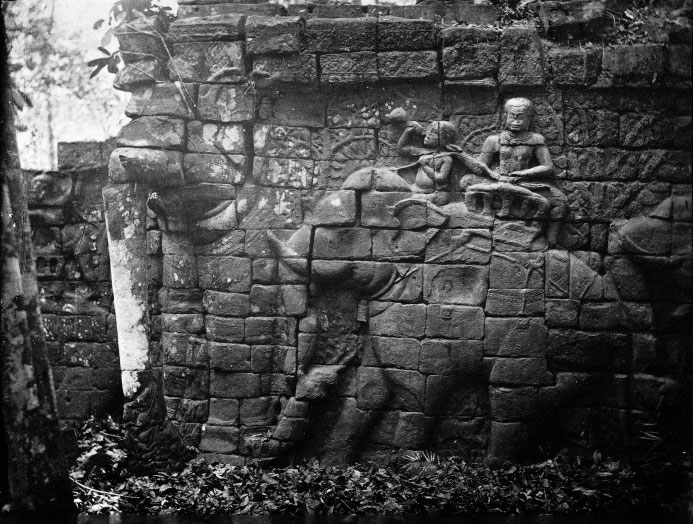
Few months after John Thomson, Frenchman Emile Gsell, then 28 years old, brought his camera equipment and darkroom to Angkor to capture more than 100 pictures. He returned later on in 1873 part of the famous expedition lead by Louis Delaporte. Gsell developed his glass plates on paper coated with albumen. The pictures of Thomson and Gsell are today priceless documents as they put in perspective the massive restoration work accomplished since the beginning of the 20th century in the temples of Angkor.
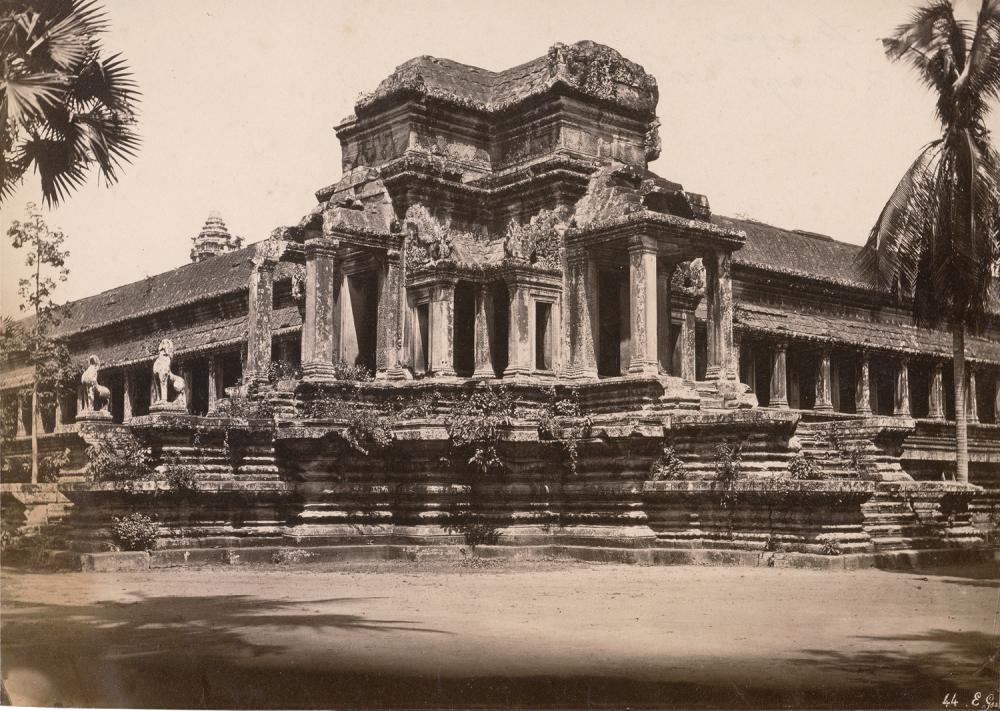
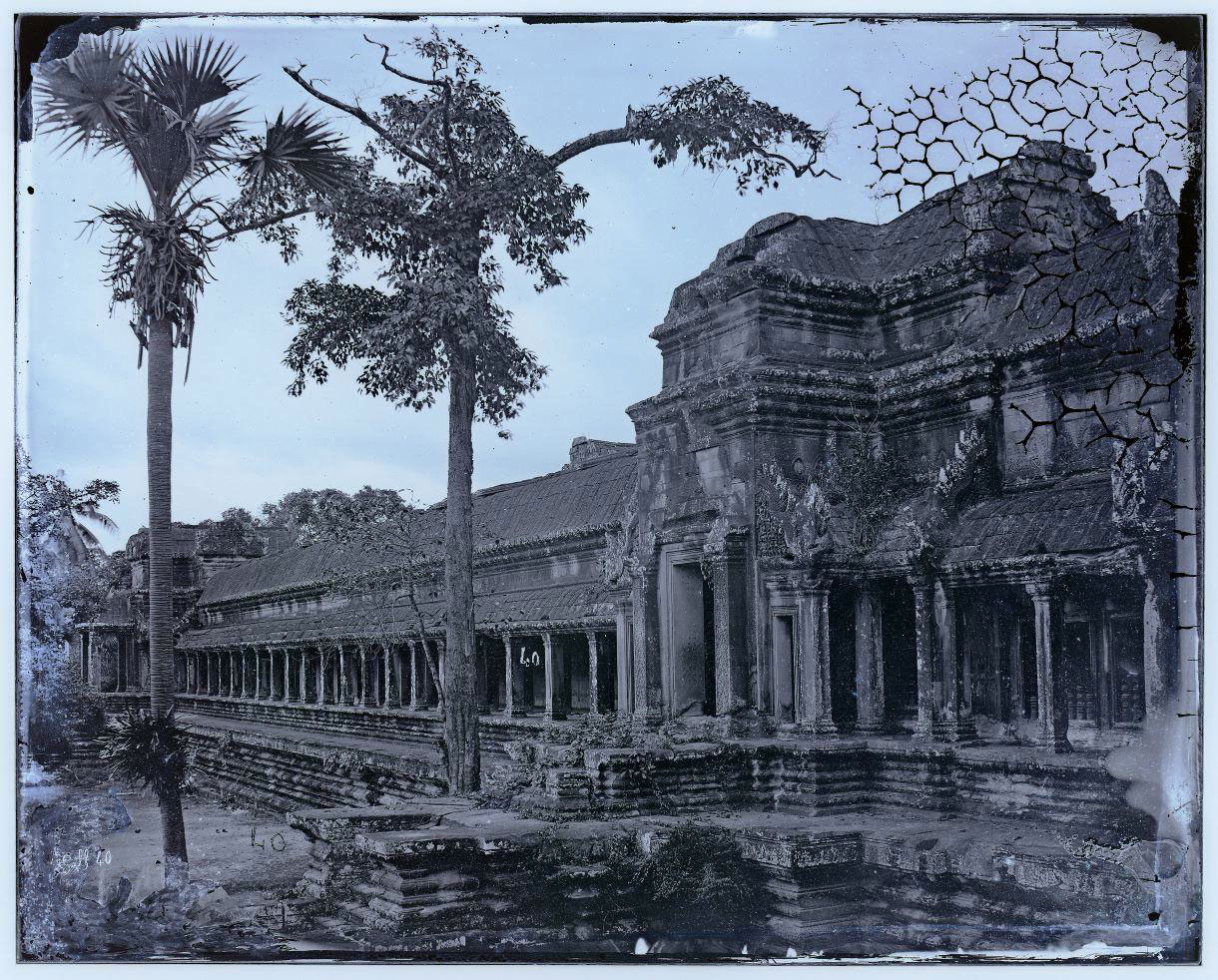
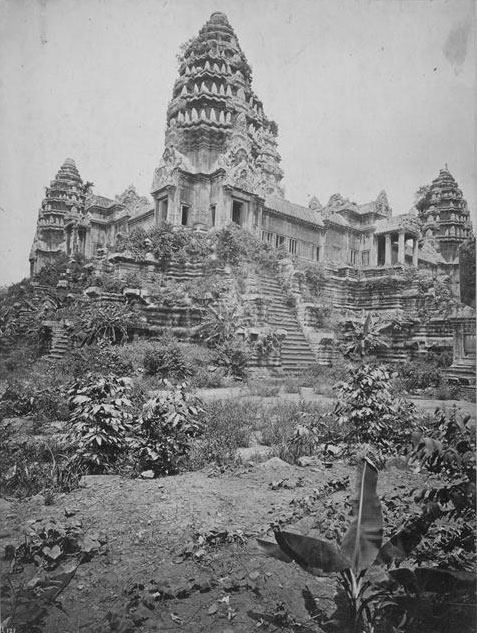
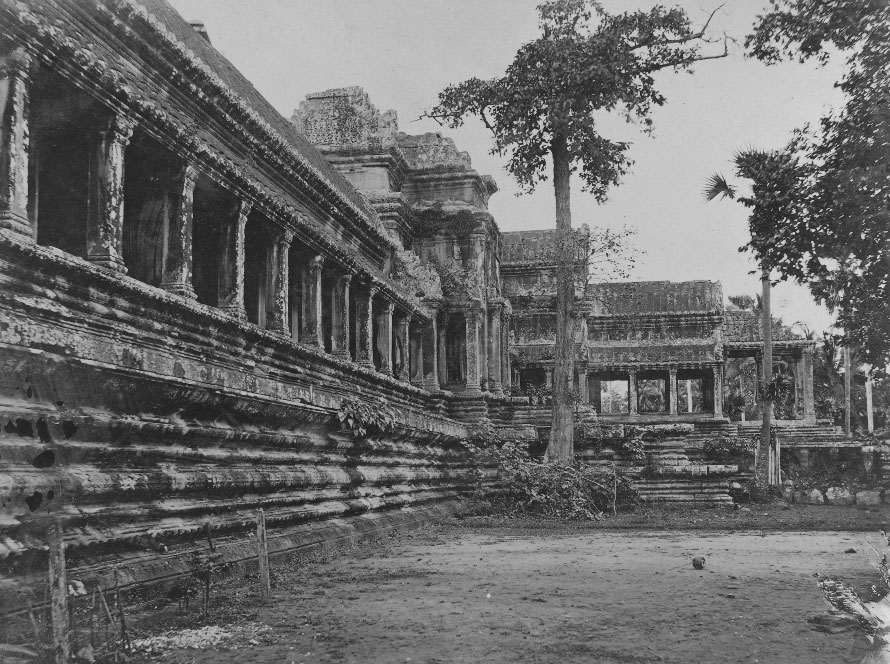
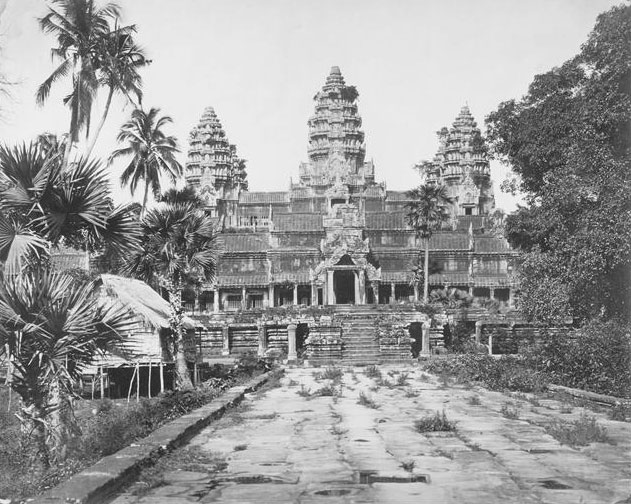
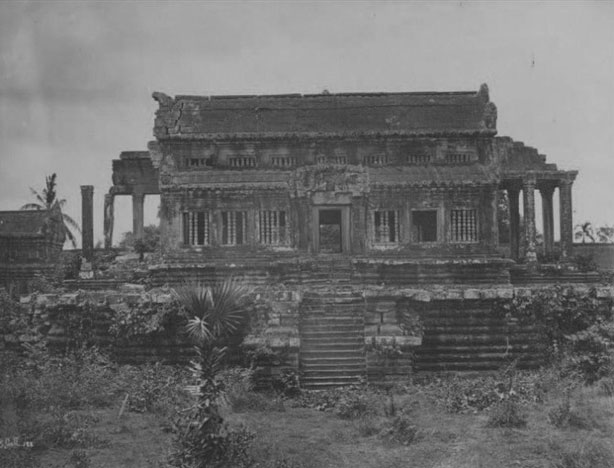
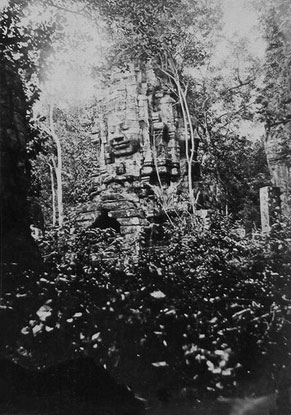
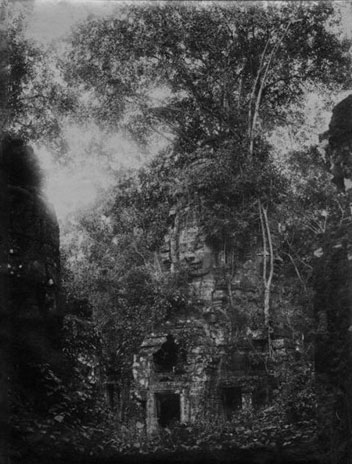
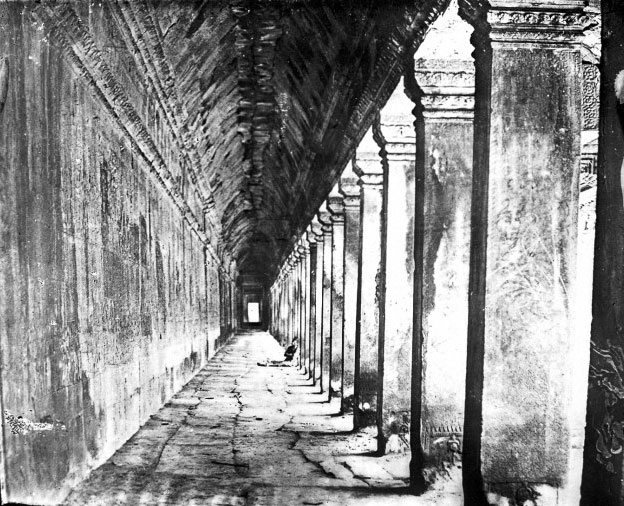
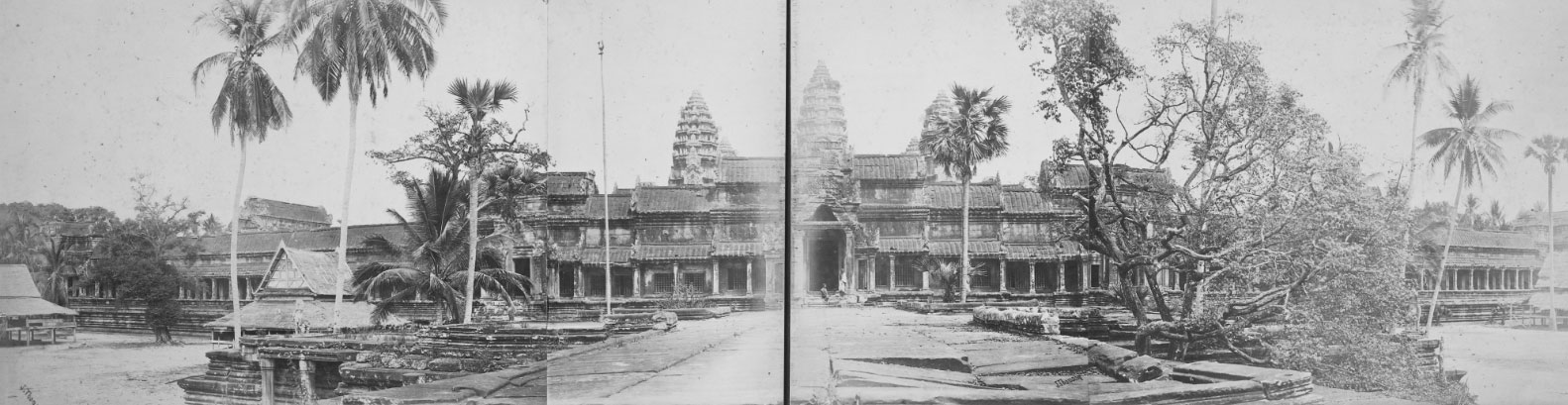
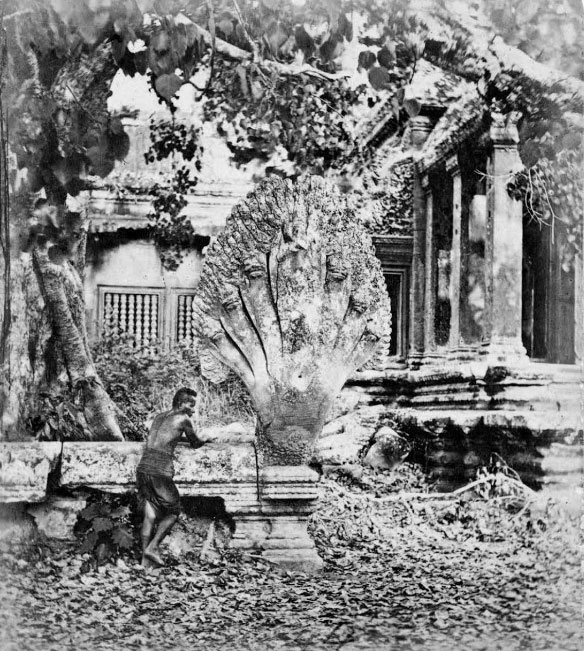
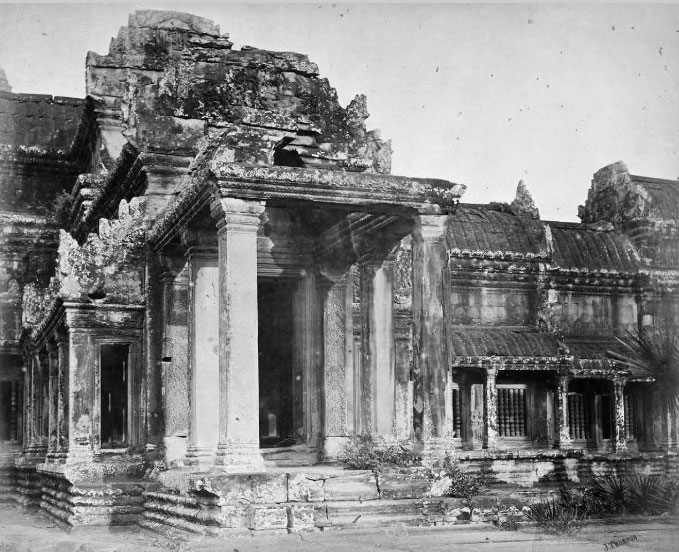
WHO WAS EMILE GSELL?
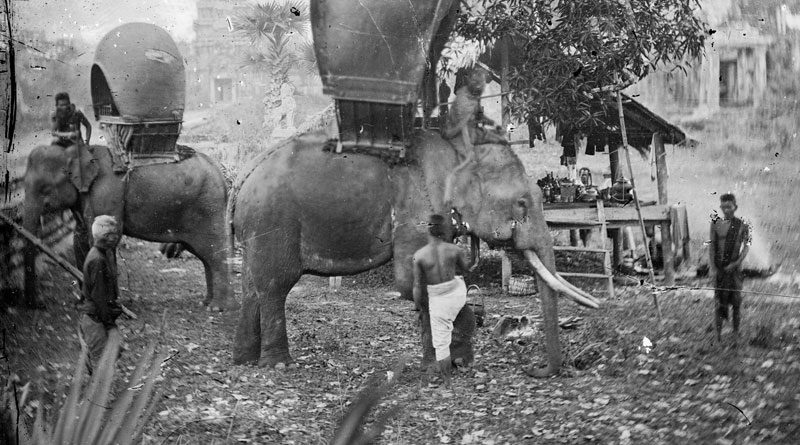
Emile Gsell, born in France in 1838, was stationed in Saigon in the French army starting in 1858 where he learnt the art of photography. He was asked by Ernest Doudart de Lagrée to join the Commission d’exploration du Mékong as and take pictures of the temples of Angkor, especially Angkor Wat temple. The expedition reached Angkor by elephants on 24 June 1866 left on 1 July 1866. Emile went back to Angkor in 1871 (a graffiti on pillar with his name and date serve as testimonial) and again 1873 with Delaporte. He died at Saigon only a few years after his last visit to Angkor on 16 October 1879 at the age of 40.
CHALLENGES AND LIMITATION OF WET PLATE COLLODION PHOTOGRAPHY IN ANGKOR IN 1866
Logistics
To appreciate to work of these photography pioneers, one has to understand the wet place collodion process and the conditions of access to Angkor Wat temple back then. Fragile glass plates of different sizes had to be carry through the difficult path between Siem Reap city and Angkor Wat by elephants and thus prone to breaking. The largest we could find on our research was 36 cs long. Because the collodion process required all steps from coating to developing to be completed before the plate dried, Emile had only 10 to 15 minutes to finish the entire procedure. It had to carry a portable darkroom (either by elephants or porters) and of course be close to it once the plate was exposed.
This process required Emile to carry quite a lot glass bottles filled with chemicals all the way from Saigon. One of the key ingredient is actually distilled water which is used in the silver nitrate bath preparation (to make the glass plate light sensitive), to make the developer solution, and the most water using to remove the fixer agent. As he developed more than 100 plates and it is was a way trip to Angkor Wat from the city of Siem Reap, the amount of water can be estimated to be hundred of liters…
Limitations
The collodion process is by definition not very sensitive to light and require long exposure (10 to 30 seconds) making it a challenge more for portrait photography than temple photography. Collodion emulsion responds primarily to blue and ultraviolet wavelengths, causing blue subjects to appear bright while warm-toned objects render as dark. This creates particular difficulty when photographing clouded skies, since white clouds contain similar amounts of blue light as the surrounding sky itself.
Emile Gsell was in Angkor during the raining season and indeed it is very difficult to see any details in the sky which is likely to have some texture. He must have spent quite a lot of time in the west side of Angkor Wat and therefore likely to have shots late afternoon rather than in the morning. Although it is possible by reducing exposure time and aperture (using waterhouse stops) to capture Angkor Wat silhouette at sunrise, it looks like Emile Gsell did not try it. He was there also as the worse time possible to taking this hot as sun is rising to the left of Angkor when facing west. Best times would be around March and September at the equinox.
THE MYSTERY OF EMILE GSELL GRAFFITI
If you examine the pillars of Angkor Wat closely, you’ll discover numerous pieces of graffiti carved into the stone, featuring names, occupations, and dates. These inscriptions appear in multiple languages including Chinese, Burmese, Vietnamese, and French, serving as testimony that Angkor Wat remained accessible for centuries and was never truly lost in the jungle.
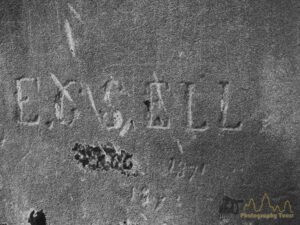
In February 2025, I stumbled upon a small piece of graffiti on a pillar facing the west side. After studying it for a moment, I recognized an “e” with a dot and made out a name that took me a few seconds to decipher—I identified it as “Gsell,” which I had first written about in this blog back in 2016. Below the name E.GSELL, a date is clearly visible, carved as 1871, with another inscription below it in the same style reading 187? What appears to be a deliberately obscured or blackened carving sits beneath E.GSELL, possibly marking his first visit in 1866.
The 1871 date remains somewhat mysterious, as a visit by Gsell that year has not been documented. While he certainly could have returned from Saigon, it’s difficult to believe he would have made the journey without his camera equipment.
