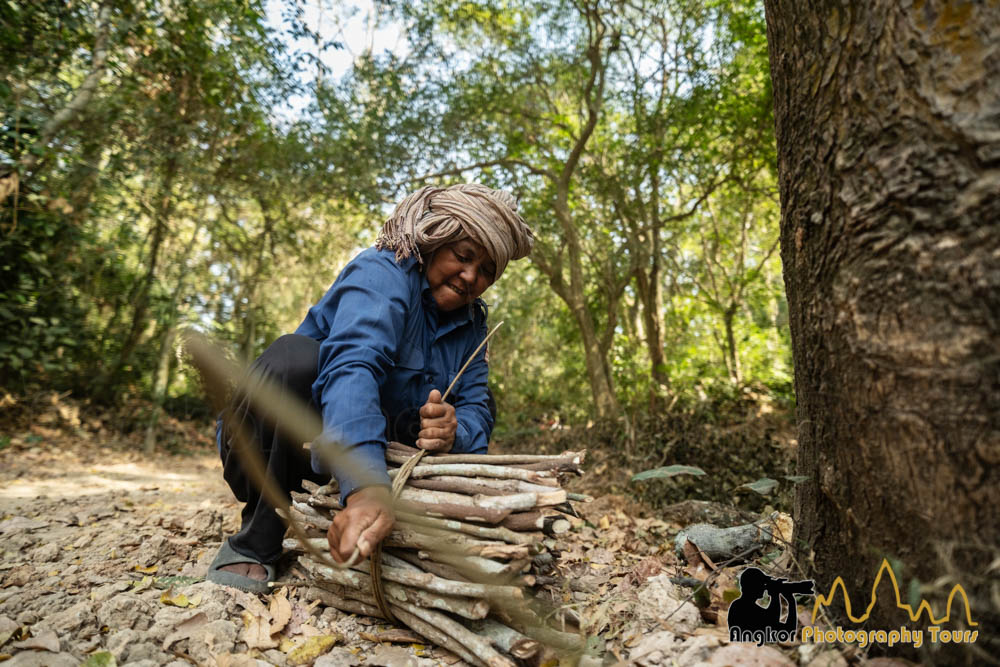
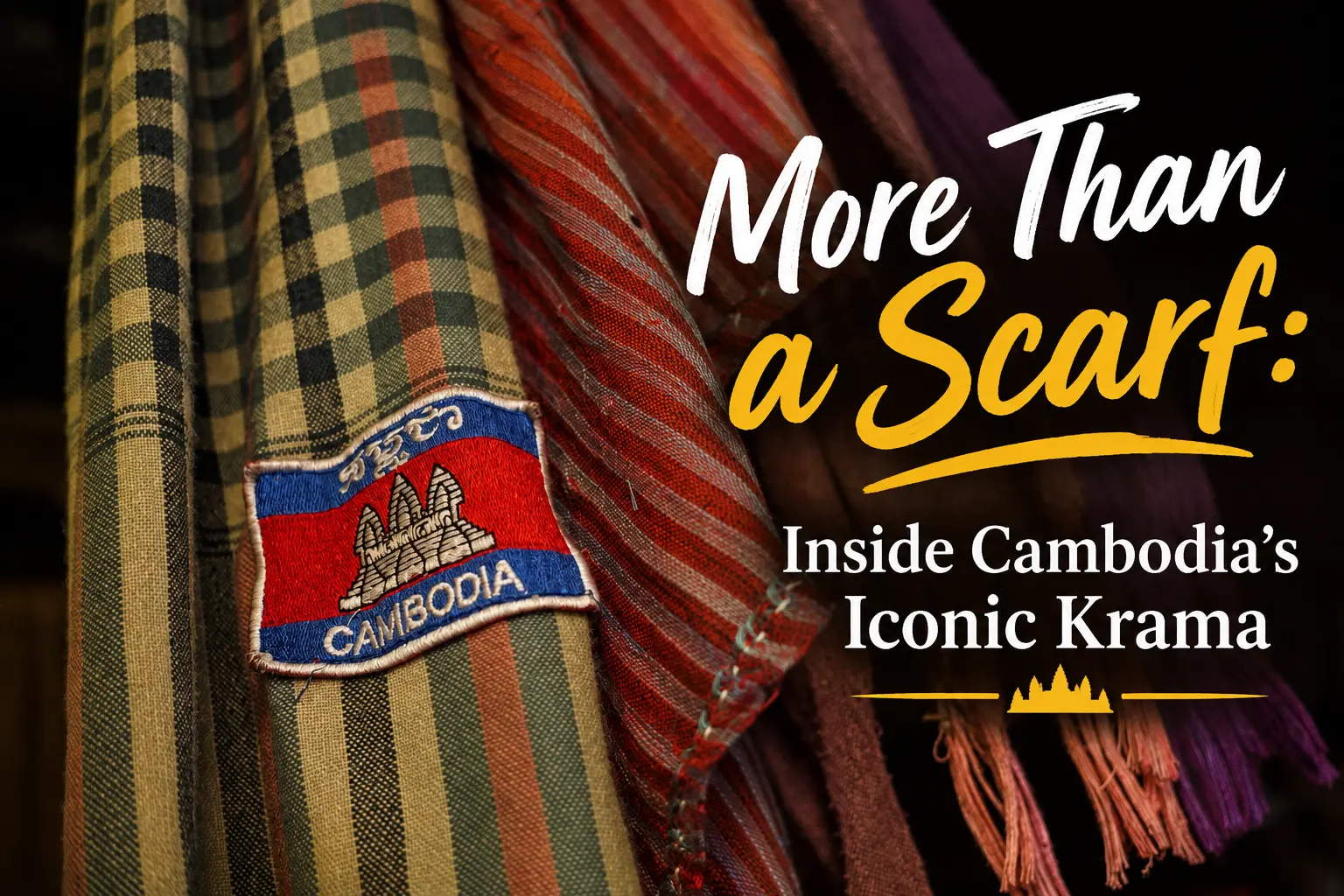
The krama (ក្រមា) (sometime spelled as kroma) is a rectangular piece of cloth undeniably connected to Cambodia—so much so that seeing someone abroad wearing one almost guarantees they have either visited Cambodia themselves or received it as a gift from a friend who did. The krama typically features a gingham checkered pattern, most commonly in classic red-and-white or blue-and-white.
The origins of the Cambodian krama can be traced back through both archaeological artifacts and written history and may date back to the Funan Kingdom between the 1st and 5th centuries AD, as evidenced by ancient statues of Shiva and other Hindu deities at Angkor Borei depicted wearing it. Centuries later, during the Angkorian Era, Chinese envoy Zhou Daguan documented in his 1296–1297 historical records that local weavers produced cotton cloths with dimensions remarkably similar to the modern krama.
The krama’s inscription on the UNESCO List of the Intangible Cultural Heritage of Humanity in 2024 recognizes its role in Cambodian cultural identity, daily life, rituals, and community cohesion.
The krama’s long history also intersects with one of Cambodia’s darkest eras. During the Pol Pot regime, Khmer Rouge cadres widely adopted the red-and-white checkered krama, wearing it wrapped around their necks as part of their standard attire.
Traditional & Modern Ways to Wear the Cambodian Krama
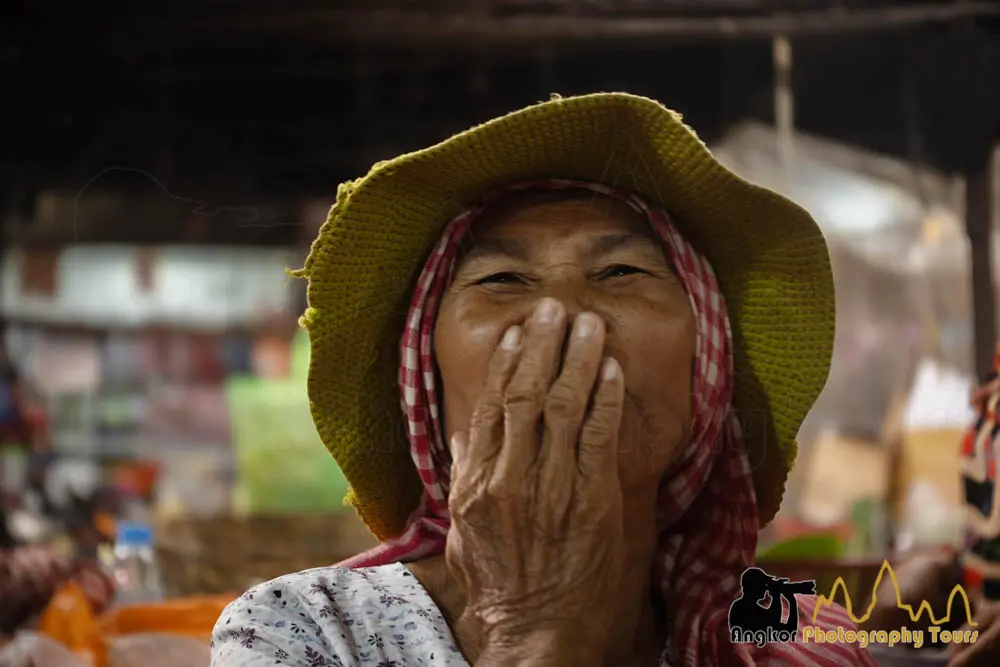
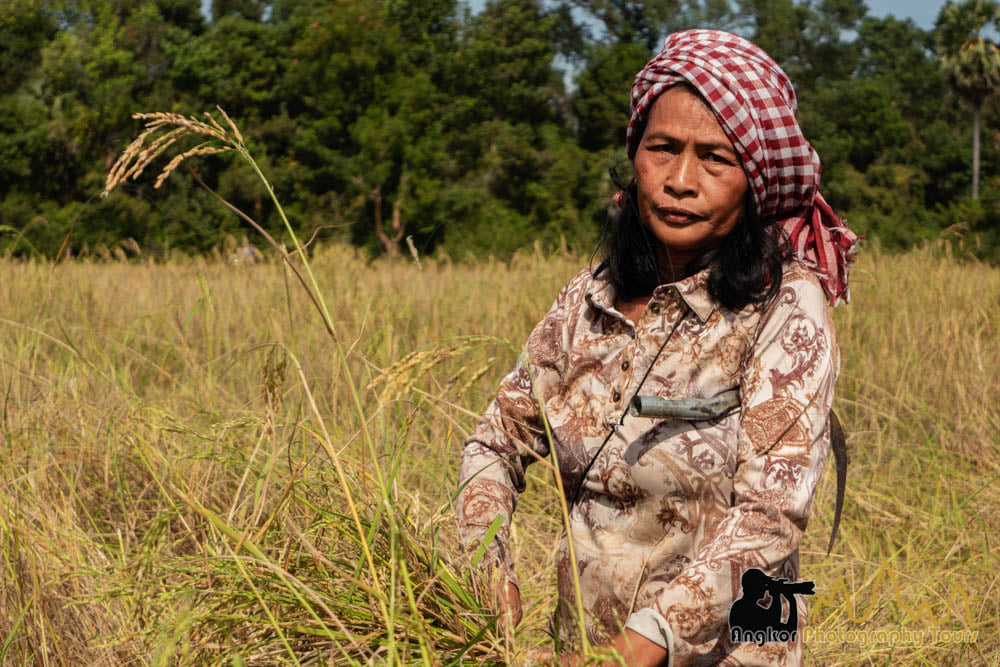
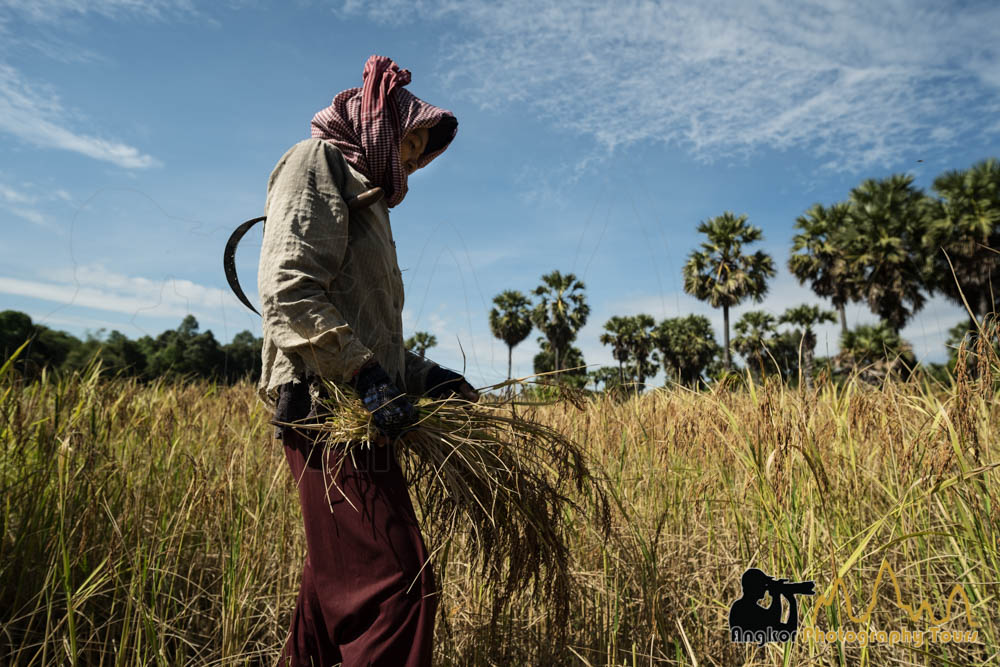
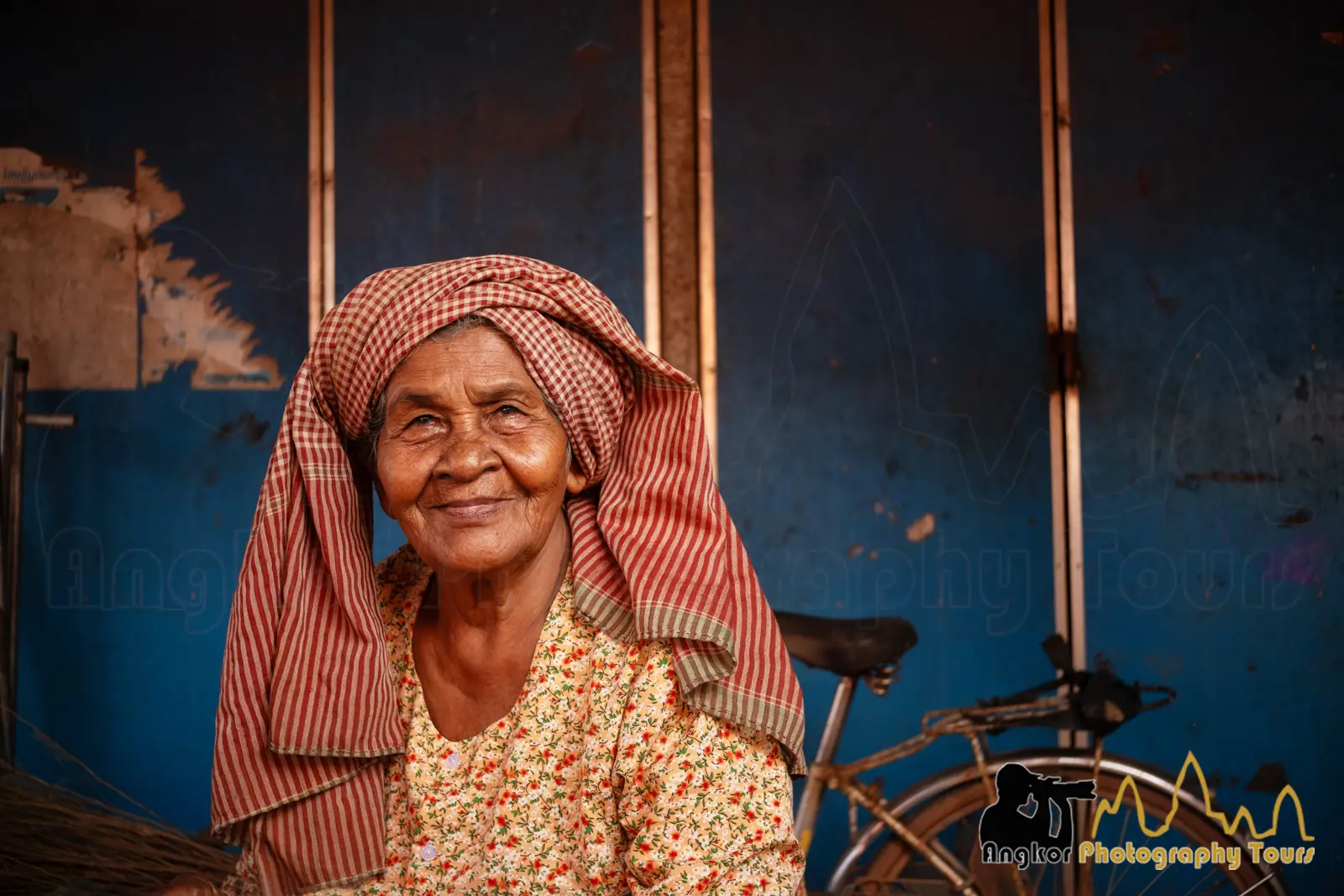
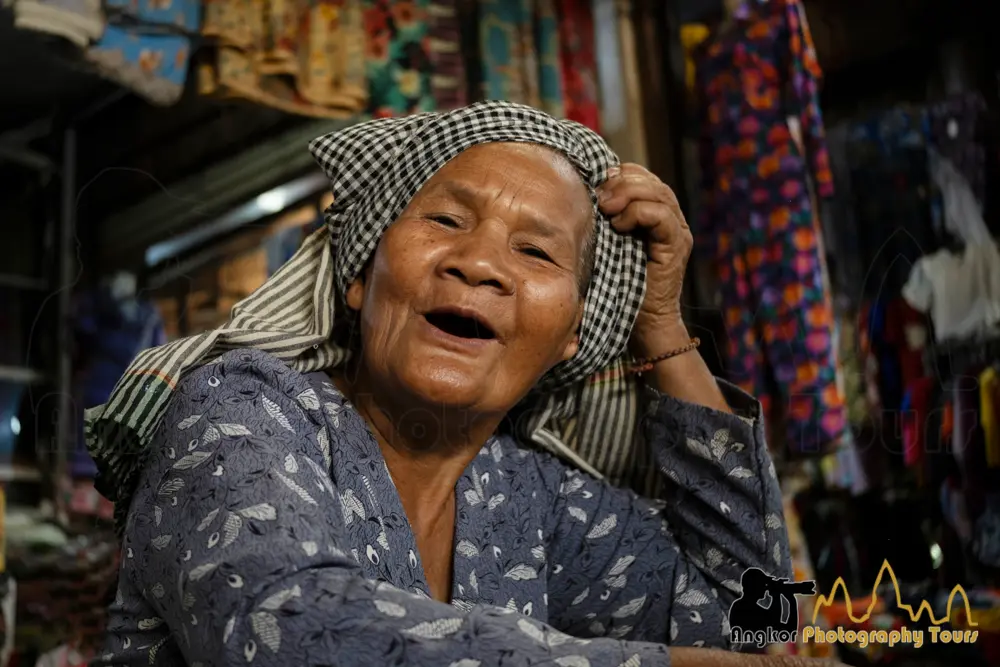
While the krama is still commonly worn by older women in local markets across Cambodia, it is unfortunately less popular among the younger generation (at least for now). As a photographer, one of my absolute favorite subjects is capturing portraits of women wearing the traditional krama in bustling morning markets or quiet rural villages.
The Krama as a Headscarf: Sun Shield and Daily Tradition
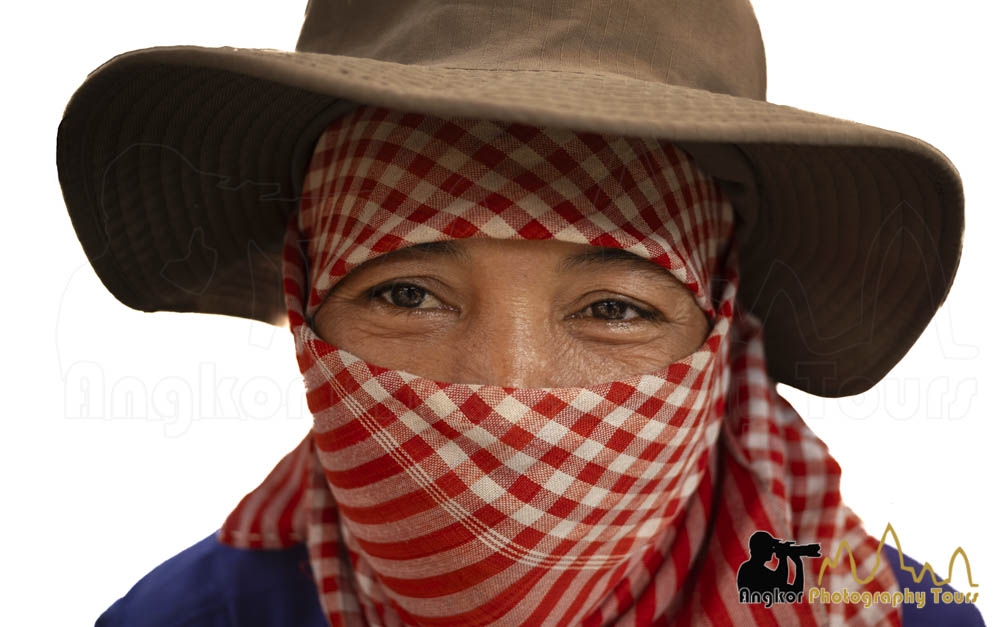
The krama is worn on the head in various styles, tied short and neat or left to drape with extra length down the neck and shoulders. Quite often in the rice fields or markets, you will also see people wearing it tucked snugly beneath a wide-brimmed straw hat for added sun protection or to block dust as a mask.
As a Sarong or Lower Garment: Wrap it around your hips and knot it securely at the waist (similar to the traditional sampot wrapping gesture). As a Belt: Thread a folded krama through belt loops or tie it at the waist over a dress or trouser. As a hammock for babies: Tied into a gentle sleeping cradle between timber posts, or draped diagonally across the chest as a traditional baby carrier.
You will also see Cambodian martial artists, such as Kun Khmer and Bokator fighters, using the krama as a functional and ritual wrap. They tie it bound tightly around the head, wrapped securely around the waist, or wound around the hands and wrists during training and traditional fights.
Beyond its traditional uses, the krama double-functions as a versatile modern fashion accessory. It can be wrapped around the waist, tied casually to a handbag, or used as a lightweight travel blanket and decorative throw. Interestingly, travelers and tourists frequently style the krama draped around the neck like a classic Western scarf—a modern adaptation of a centuries-old Khmer staple.
In a more practical way, it can be used folded as bowl shape for carrying heavy baskets or objects on the head or used as a rope to tie things together.
A Piece of Cambodia to Take Home: The Krama as a Meaningful Gift
The krama is frequently given as a gift by travelers returning from Cambodia—a perfect way to bring back a piece of the country to share with friends and family. Its cultural significance was highlighted when it was included in the official gift welcome kits for delegates during the 20th Francophonie Summit, hosted in Cambodia in 2026.
How much a krama cost?
The price of a krama depends primarily on its material—whether standard cotton, lightweight linen, or fine raw silk—as well as the complexity of its weave. Where you purchase it also plays a major role. Outside the Siem Reap city center, a simple cotton krama at a local market stall can cost as little as USD 4.50. By contrast, the same in high-end boutiques for tourists like Artisans d’Angkor or a luxury hotel gift shops will be much higher with some online retail shops selling it at USD 35.
How krama scarfs are made?
Like silk weaving, krama production involves many steps: collecting the fibers (cotton or silk), preparing fibres and dyes, weaving with a headloom— so it can take several days to make a krama.
Faces & Fabrics: Portraits of the Cambodian Krama Markets to Countryside