
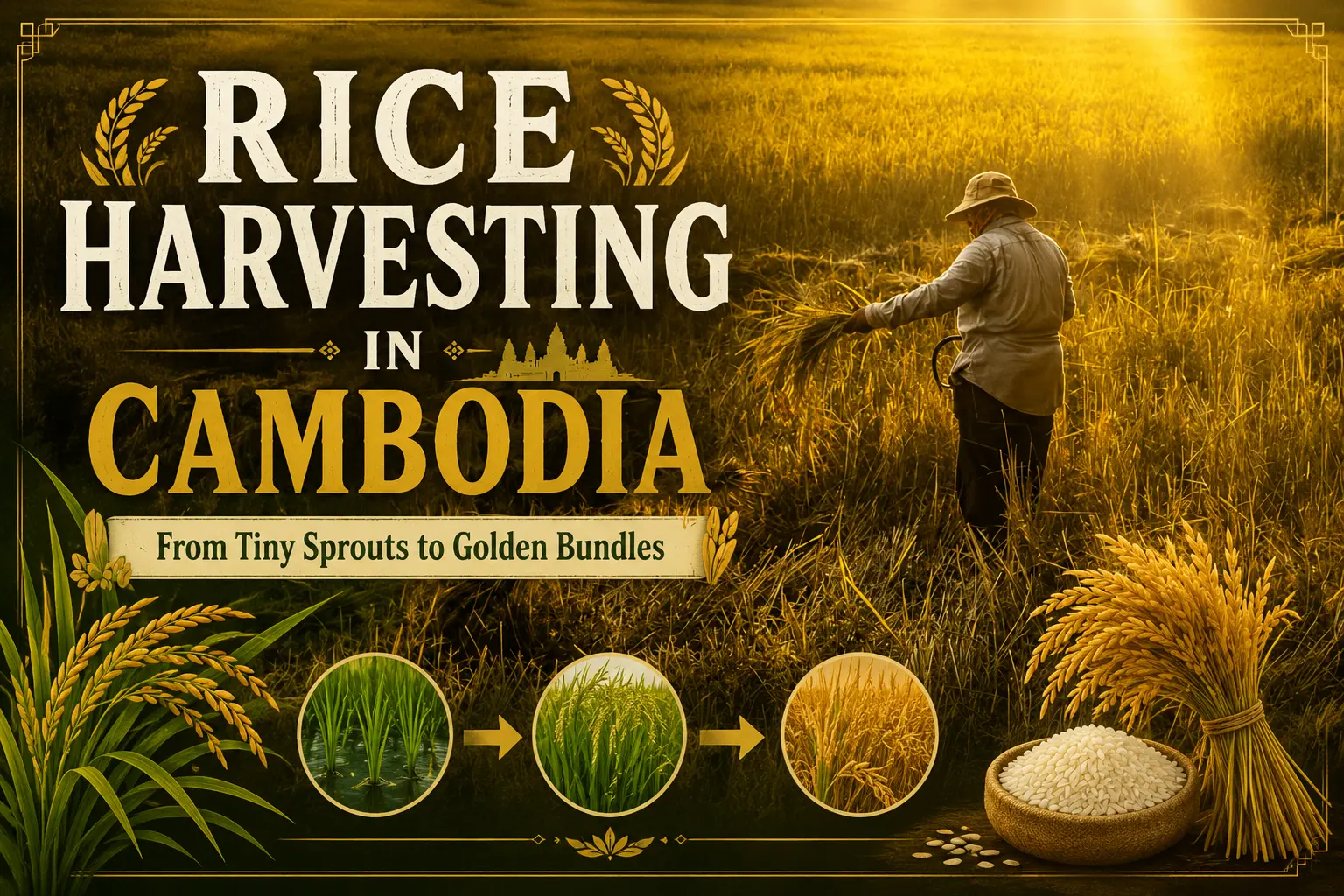
Rice fields are omnipresent in Cambodia’s landscapes bringing their touch of green and gold almost all year long. Also called the “white gold” of Cambodia, rice is a staple food for Cambodians that they eat every day. It is estimated that rice takes up to 90% of the cultivated areas.
Rice cultivation follows several processes which are: soil preparation, transplantation, harvesting. Rice cultivation is thought to have been practiced by Cambodians for over 2000 years. Cambodia’s rice industry has experienced a turbulent past, shaped by the Khmer Empire’s rise and decline as well as subsequent periods of conflict and foreign occupation. During the 1950s French colonial period, Battambang province served as the center of the rice trade, and a railway was constructed linking Battambang and Phnom Penh. Yet much of the rice farming infrastructure was destroyed under the Khmer Rouge regime. While Cambodia became a rice-exporting nation in the late 1990s, the sector continues to face considerable obstacles in productivity, logistics, transportation, labor, and research. Despite these challenges, rice farming contributes more than 20% to the nation’s GDP today.
TRIVIA | RICE IN KHMER
Did you know that in the Khmer language, rice is referred to by three different names depending on its state: uncooked, cooked, or growing in the fields? Rice holds immense significance in Cambodia, to the extent that it is synonymous with the act of eating.
[ong-gor]
uncooked rice
[baay]
cooked rice, also means to eat
[srow]
growing rice
CAMBODIAN JASMINE RICE
Cambodia’s premium jasmine rice varieties—Phka Rumduol, Phka Malis, Phka Rumdeng, and Phka Romeat—are long-grain rice produced during the wet season that have garnered international acclaim, most recently crowned the World’s Best Rice for the seventh time at the 2025 TRT World Rice Conference in Phnom Penh, following previous victories in 2012, 2013, 2014, 2018, 2022, and 2024.
Because of its success, Phka Rumduol is the second-most exported variety of rice from Cambodia. Phka Rumduol is grown in Takeo, Phnom Penh and Battambang provinces. The quality of Cambodian rice is evaluated by experts based on several parameters, including:
- Grain moisture content.
- Grain weight, length and width.
- Grain elongation after cooking.
RICE FARMING IN CAMBODIA
Rice in Cambodia is grown in four different ecosystems namely: rainfed lowland, rainfed upland, deepwater, and irrigated, rainfed lowland being with 70% the major ecosystem used in Cambodia. Siem Reap has quite a lot of paddy fields in the lands bordering the temples of Angkor or in the flooded lands close to the Tonle Sap but overall, produces much less rice than other provinces like Battambang, also known as the ‘rice bowl’ of Cambodia.
The amount of milled rice exported by Cambodia has continued its strong upward momentum, hitting an all-time record of 940,321 metric tons annually (source: http://www.crf.org.kh/). This represents a massive leap from the 690,829 metric tons exported in 2020, generating over $602 million in revenue and bringing the country closer to its symbolic long-term goal of 1 million tons per year. This might look as an impressive number but it doesn’t allow Cambodia to rank within the top 10 world rice producers, each of which produces several millions of metric tons annually. Cambodia grows about 2000 varieties of rice.
RICE HARVESTING SEASON IN CAMBODIA
In numerous provinces across Cambodia, two crops of rice are harvested every year; the first one harvested in November – December coincides with the monsoon or wet-season rice crops. The process involves sowing rice seeds at the onset of the first rain during the rainy season, typically around June. Wet-season crops are the ones producing the most rice.
The second harvest takes place in February and is dedicated to the dry-season crops where farmers plant the rice at the end of the monsoon, typically around November. In the lands bordering the Tonle Sap lake, up to four crops can be grown every year but dry season rice farming in the seasonally flooded lands of the Tonle Sap is becoming more and more challenging in recent years. The production of rice during the dry season represents only about 20% of the total rice production in Cambodia.
RICE FARMING PRACTICES IN CAMBODIA
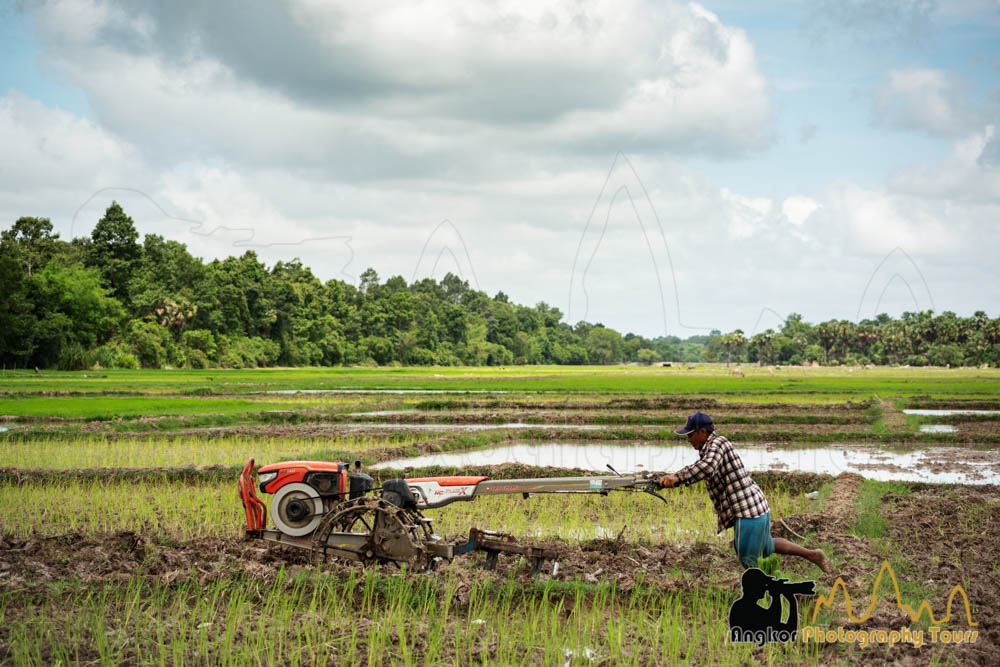
Much like in other parts of Asia, such as Bali, rice farming in Cambodia still relies heavily on manual labor, with many farmers working barefoot or wearing simple socks in the flooded paddy fields. However, modernization is accelerating; over the past few years, mechanized harvesting and plowing machines have become an increasingly common sight across the Cambodian countryside.
Slash and Burn
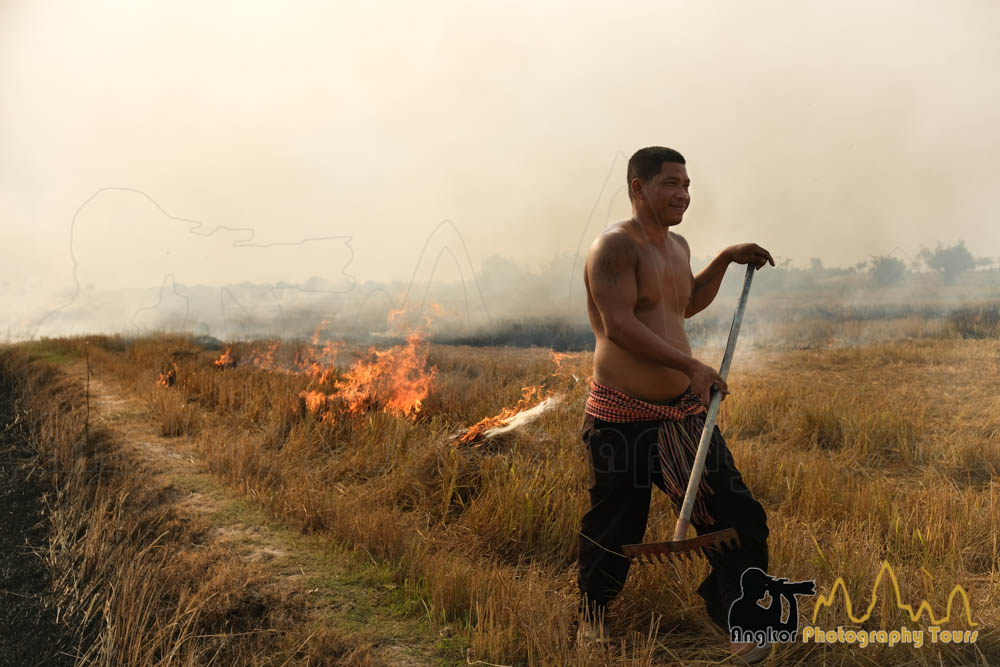
Slash-and-burn, has been a traditional method of cultivating rice fields in many parts of Asia for centuries. This practice involves clearing a plot of land by cutting down vegetation and burning it, which temporarily enriches the soil with nutrients from the ash. Farmers then plant rice in the cleared area for one or two growing seasons. Once the soil fertility declines, they move to a new plot and repeat the process, allowing the previous area to regenerate naturally over several years. While this method has sustained communities for generations, it has become increasingly problematic due to environmental concerns such as deforestation and greenhouse gas emissions. Cambodian rice farmers are using this technique although it is not as common as Indonesia or Thailand.
Plowing rice fields
Preparing the soil before rice planting or transplanting involves a crucial step known as plowing. The objective of plowing rice fields is to eliminate grass and weeds while exposing pests and diseases to sunlight for their eradication. Plowing also break soil clods into smaller masses and improve the texture of the soil. Nowadays in Cambodia, tractors have largely replaced buffalos for plowing and it is extremely rare to see farmers still using buffalos for that purpose.
Rice transplanting in Cambodia
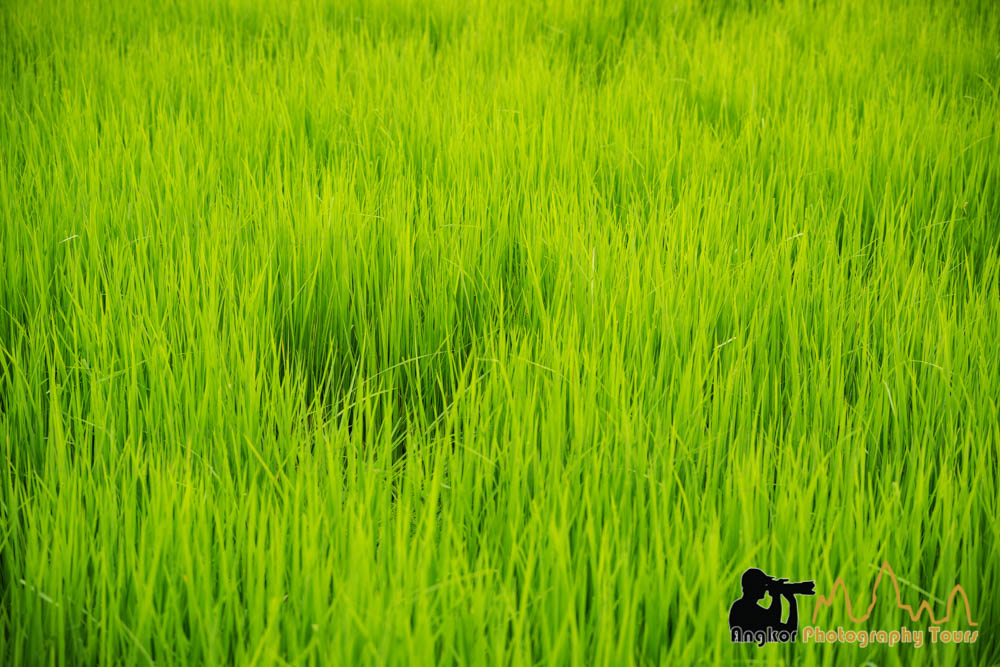
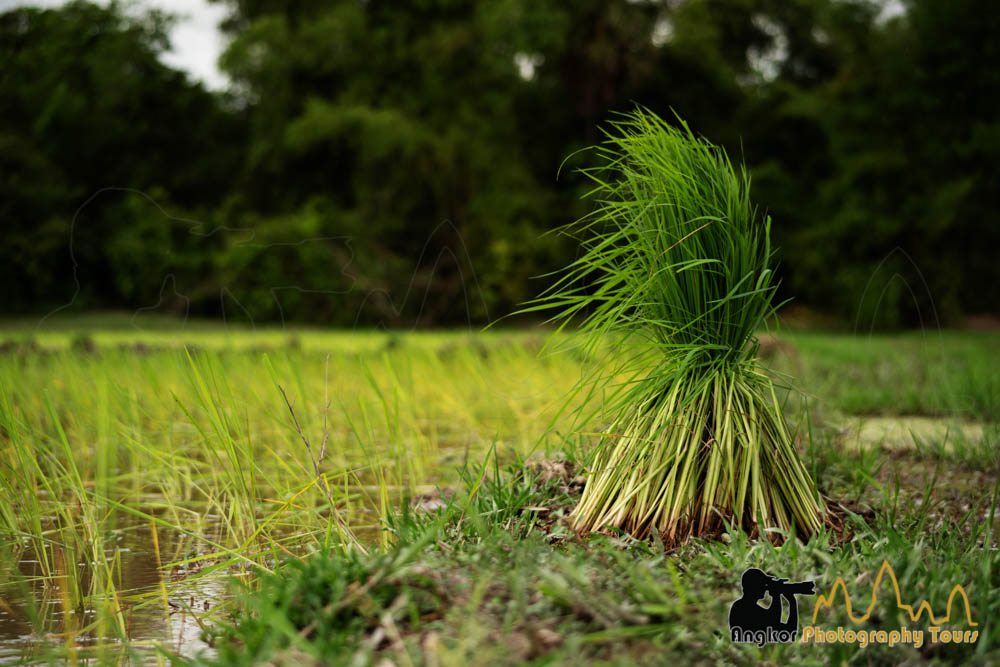
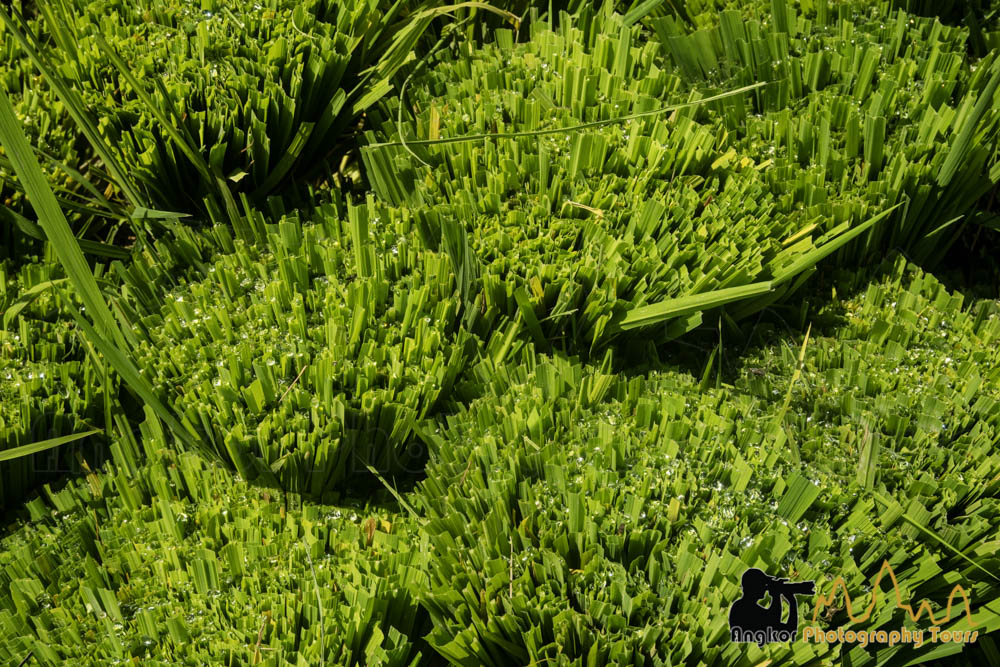
Rice transplantation or rice transplanting is an important rice farming practice that involves carefully moving young rice seedlings from a nursery to the main field. This method begins with nurturing seeds in a controlled nursery environment until they reach the ideal age of 20-30 days.
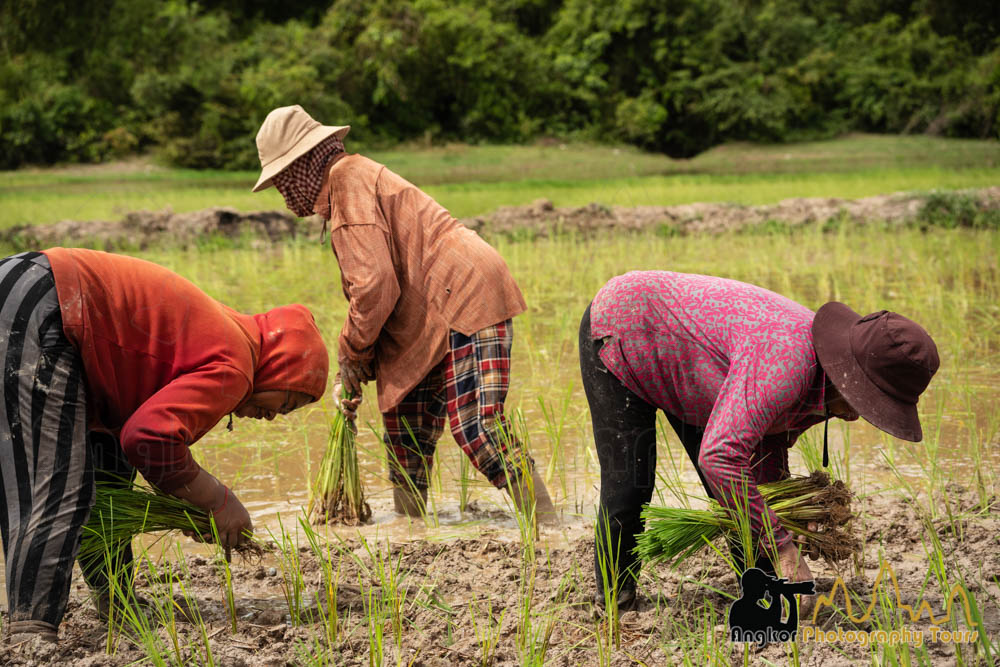
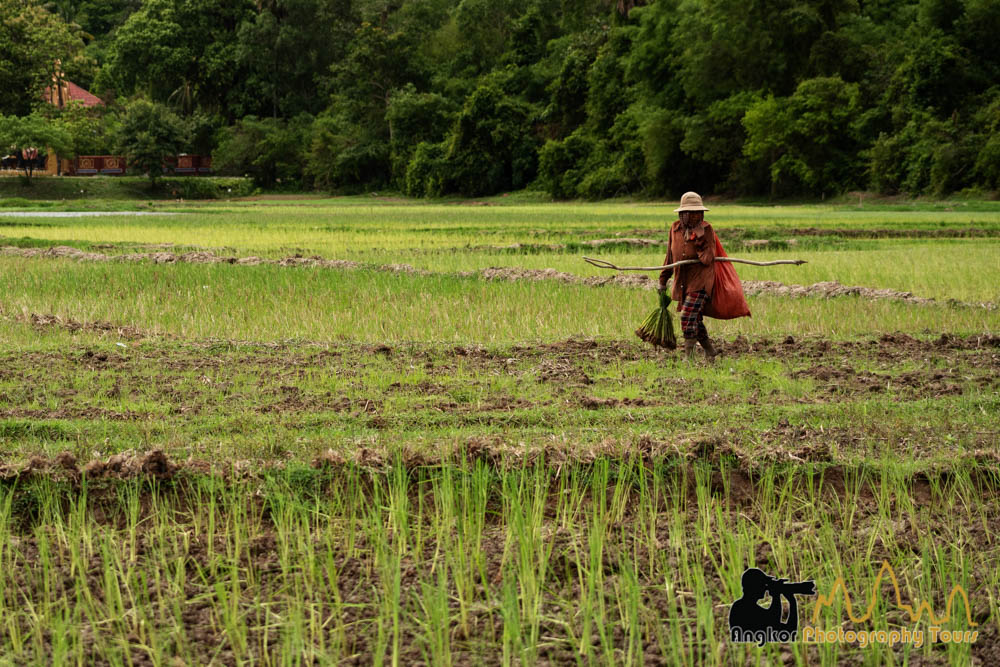
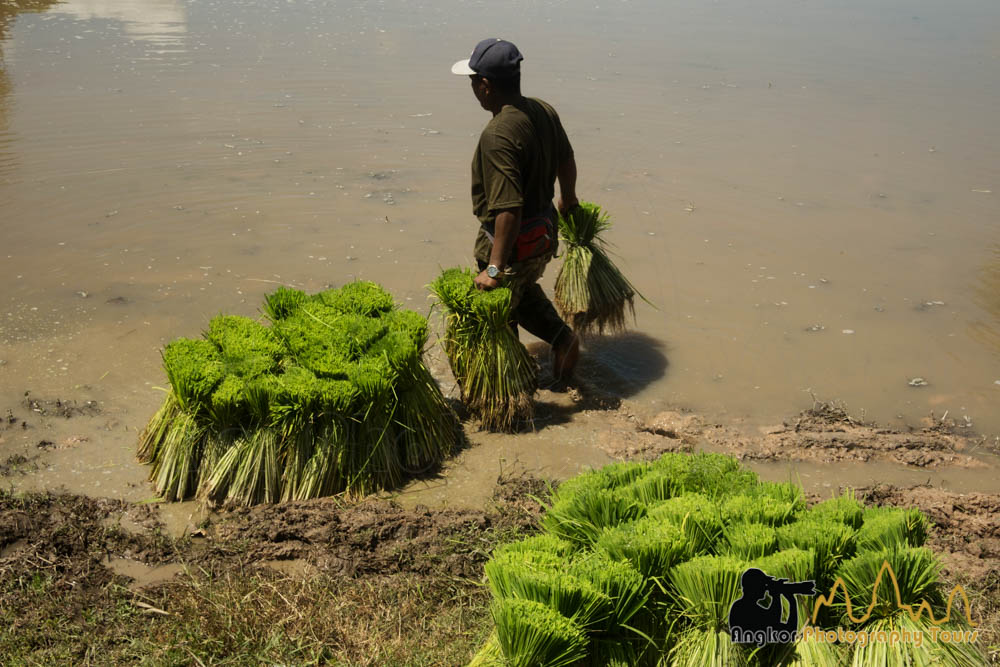
Several steps are involved the first being to carefully uproot the young rice plants from the nursery, grasping them firmly by their stems. To cleanse the roots of clinging soil, the farmers dip the rice stems into water and shake them vigorously. Sometimes, they even gently tap the roots against their feet to dislodge stubborn soil clumps.
The second step, is to gather the stems together by forming neat bundles. To secure these bundles, the farmers use dried herbs as natural ties. A wooden elevated table sometime used to facilitate this process. This traditional bundling technique not only keeps the seedlings organized but also facilitates easier handling and transportation to the main paddy field where they will be replanted.
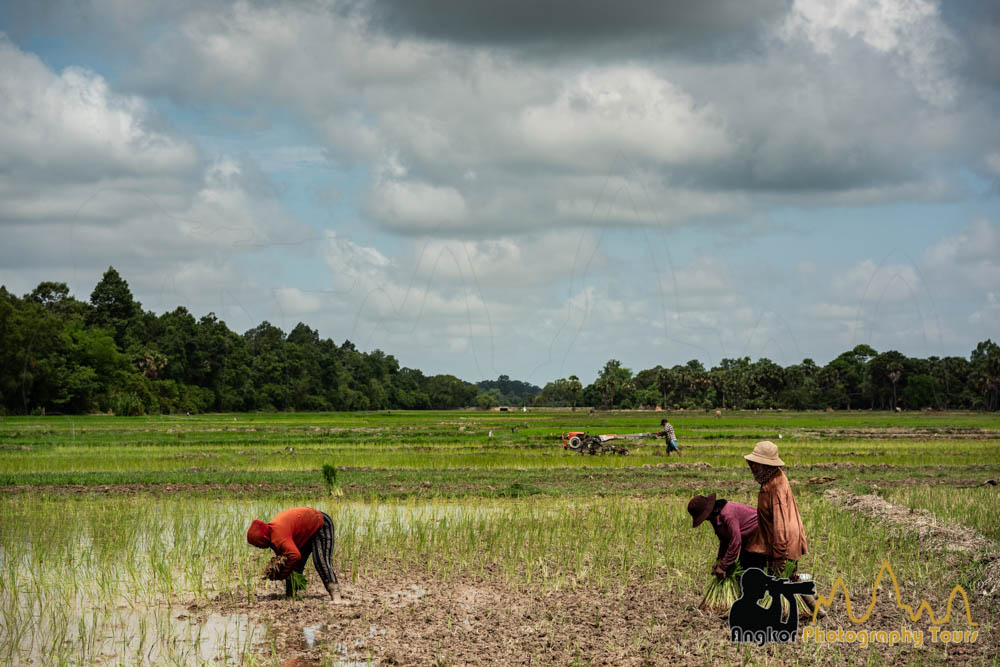
With patience and meticulous care, rice farmers then delicately replant bundles of rice by hand into the soil moistened by the first rains of the monsoon season. Sometime, rice is transplanted in shallow waters. It is important to maintain a certain spacing between the seedlings (15 to 20 centimeters) to give numerous benefits such as better weed control and higher yields. Despite its advantages, rice transplanting presents several challenges. The process is labor-intensive and time-consuming, requiring a significant workforce and optimal weather conditions for success. Maintaining consistent spacing and plant density across large fields can be difficult when done manually, potentially affecting crop uniformity. In rainfed areas, delayed rainfall can lead to seedlings becoming too old in the nursery, reducing their vigor upon transplanting. Transplanting machines were actually introduced in Cambodia recently but we did not see any used around Siem Reap.
Agri-Smart Cambodia has developed and brought to Cambodia rice transplantation machines. These machines offer significant time and labor savings: using the transplanter, known as the Eli Rice Seeder, a single operator can plant one hectare in just 30 minutes. In contrast, traditional methods require a team of 30-40 workers laboring for an entire day to cover the same area.
Pest Control
In Cambodia’s rice fields, farmers use several methods to protect their crops from birds, particularly as harvest time approaches. Pest control animals play a vital role in managing pests in rice fields, contributing to sustainable agricultural practices. In Cambodia’s rice fields, farmers use several methods to protect their crops from birds, particularly as harvest time approaches. When flocks of small birds attempt to feed on the ripening grains, farmers employ both modern and traditional deterrents. These include protective nets stretched across the fields, corrugated metallic plates that farmers strike with wooden sticks, creating sudden noise and movement to startle birds. The reflective surface of these plates adds to their effectiveness. Traditional methods like scarecrows are also used.
HOW RICE IS HARVESTED IN CAMBODIA
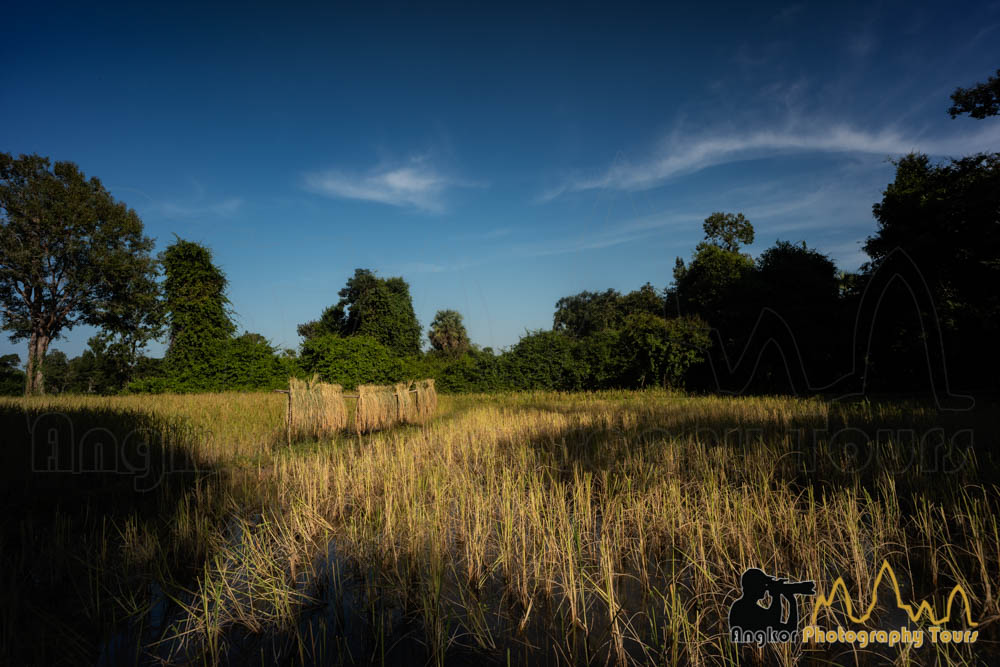
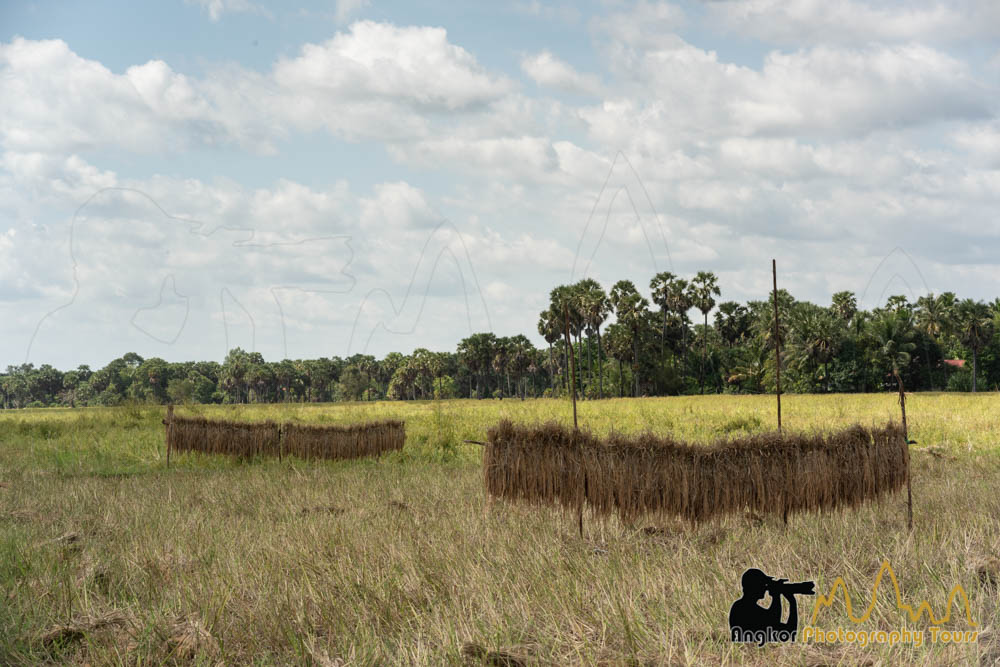
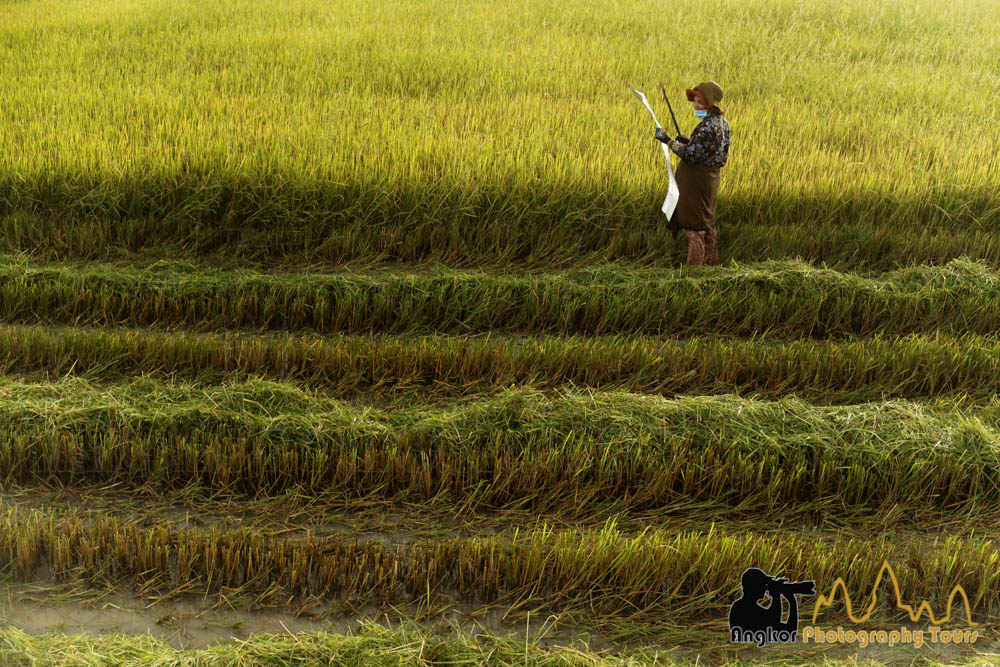
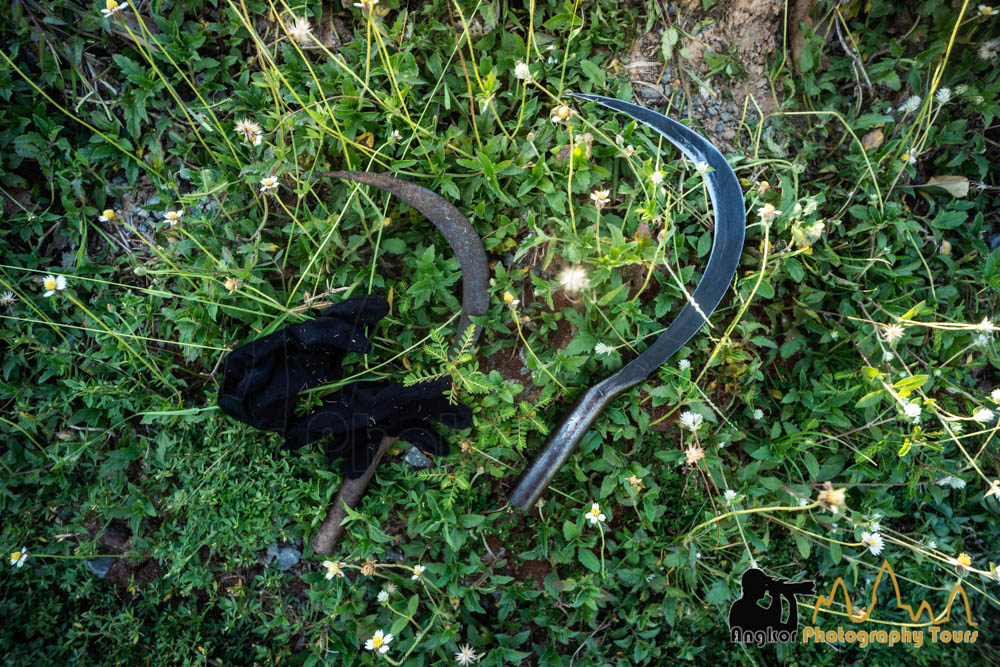
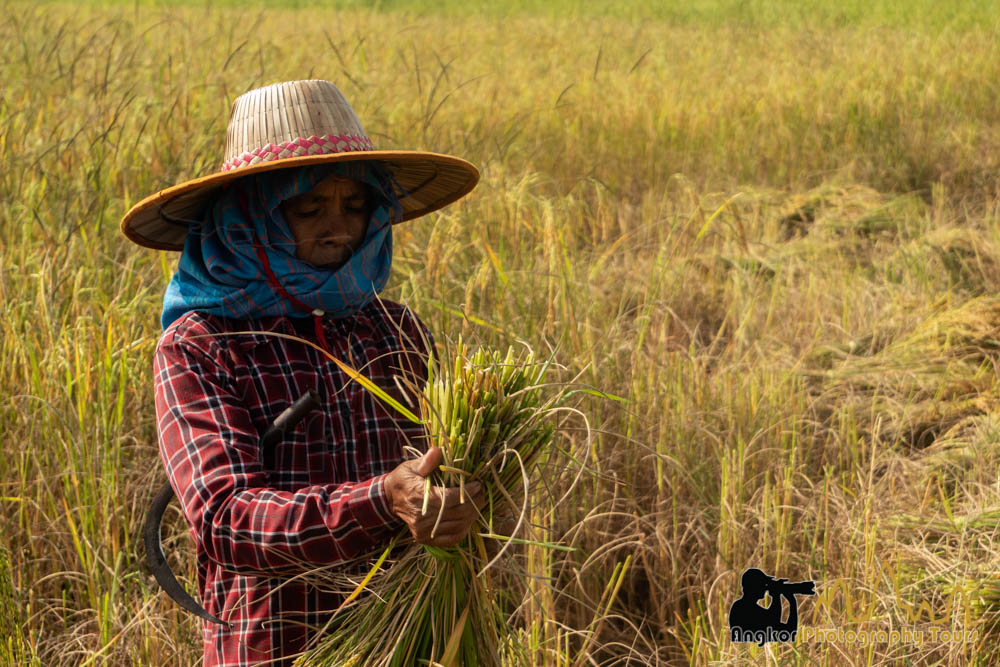
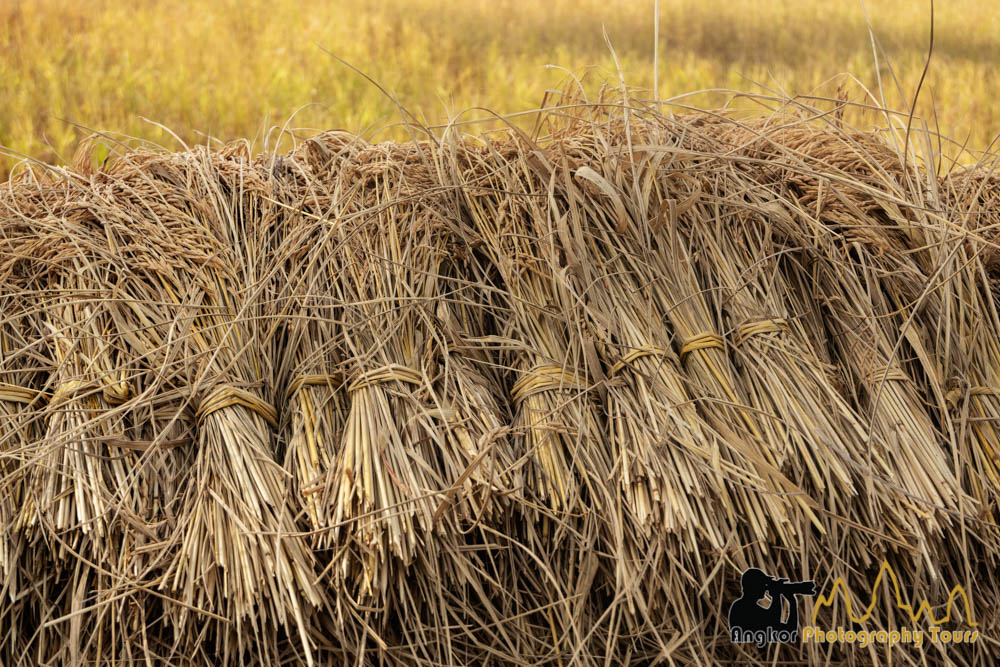
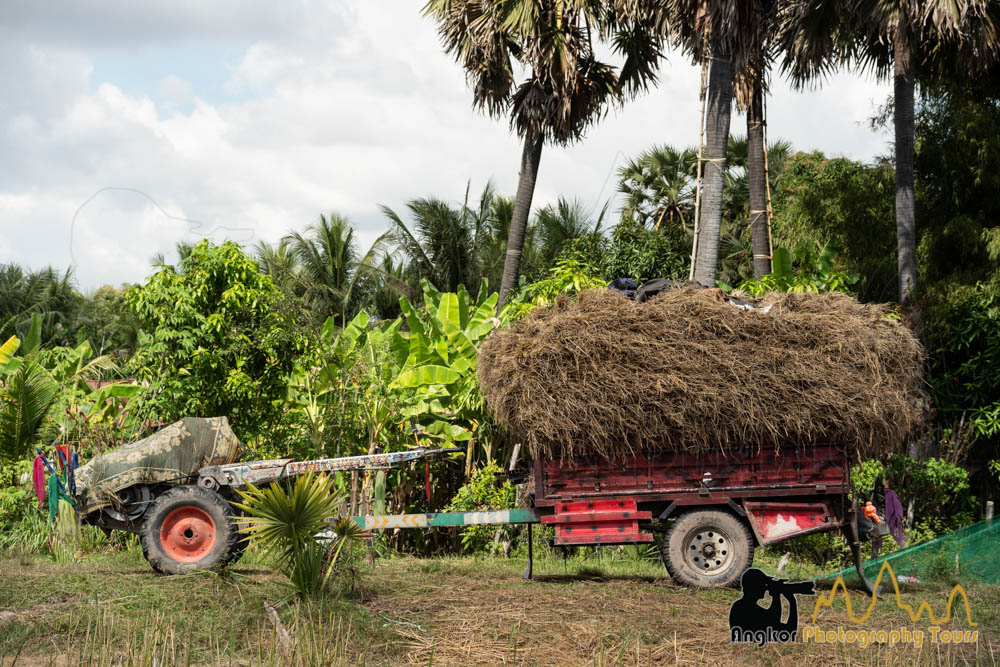
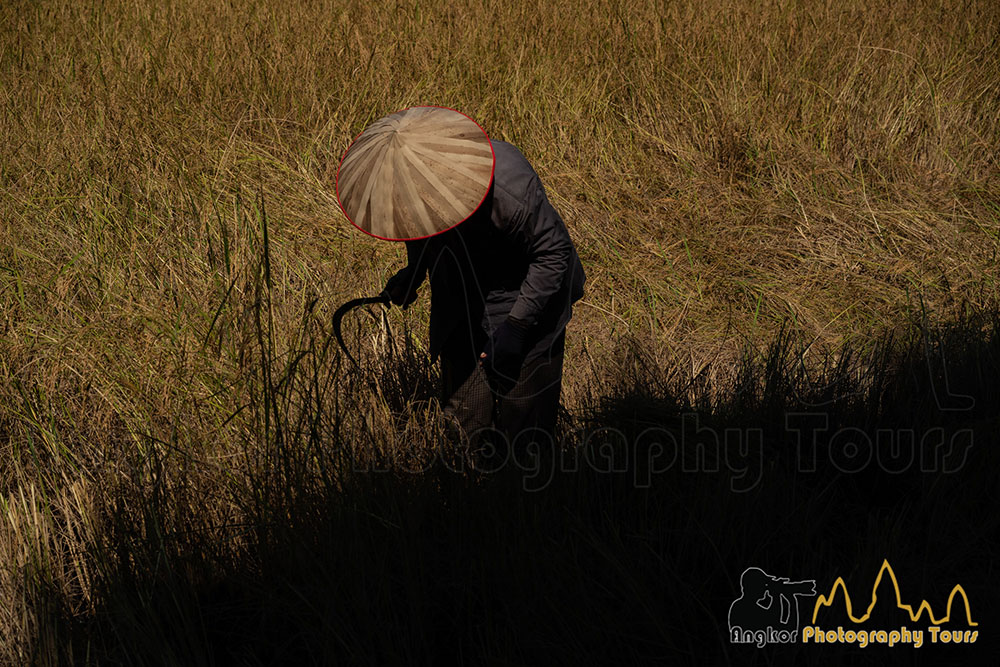
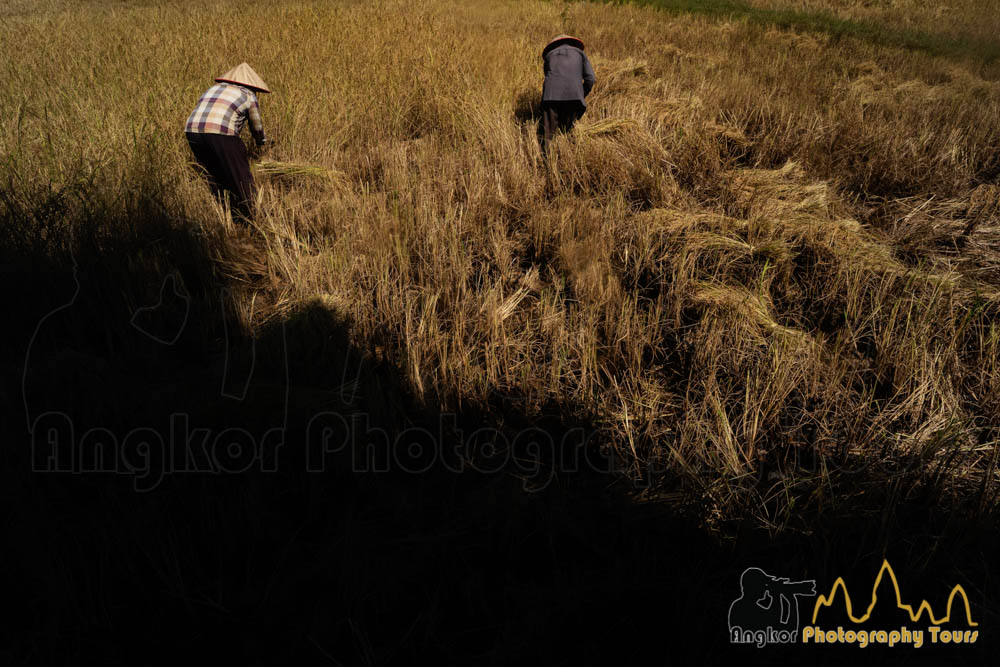
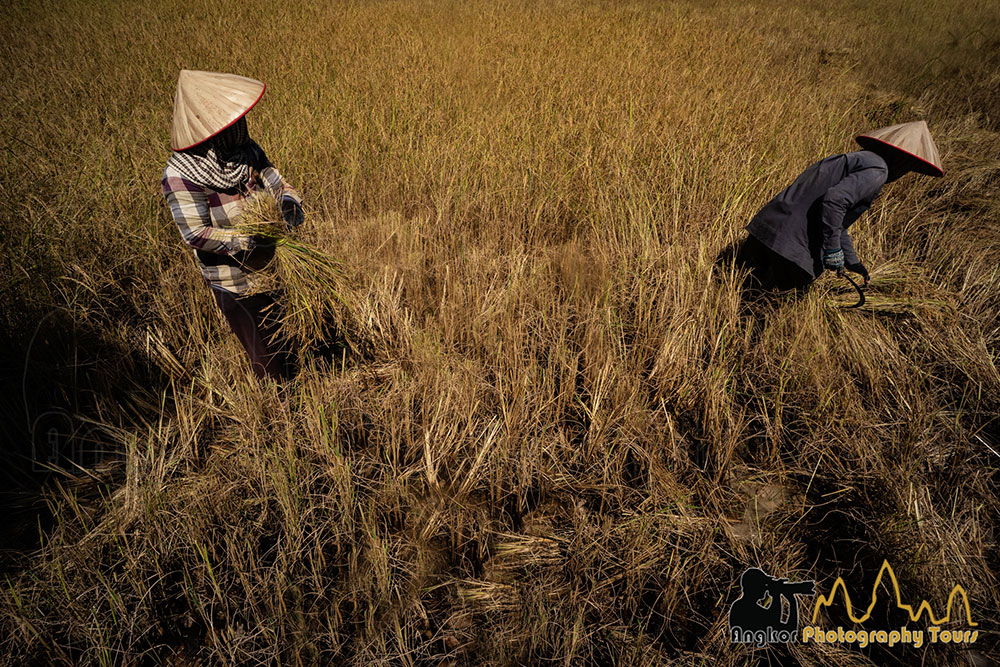
Rice cutting is very labor intensive and sickles are used to cut thick bundles about 20 cm above the chalk. Rice harvest workers can be either members of the same family, neighbors, farmers helping another landowner, or also paid workforce. Rice workers are working together tirelessly all day long from one paddy field to another. The ambiance is very friendly and people are chatting with each other but they are always focused on their task. But they don’t always work in groups, you can also find a lonely old woman working in the field by herself. A working day in the rice fields typically starts around 7 am, workers have a lunch break around 11:00 am and go back to the paddy fields from 1 to 5 pm, with some breaks in between. Bundles of rice left on the fields are then collected and put together to dry either on the bunds or by the side of the road on big piles. You can also see on rare occasions rice drying on handmade wooden dryers. After harvesting, the remaining rice stalks are grazed by cattle and other animals.
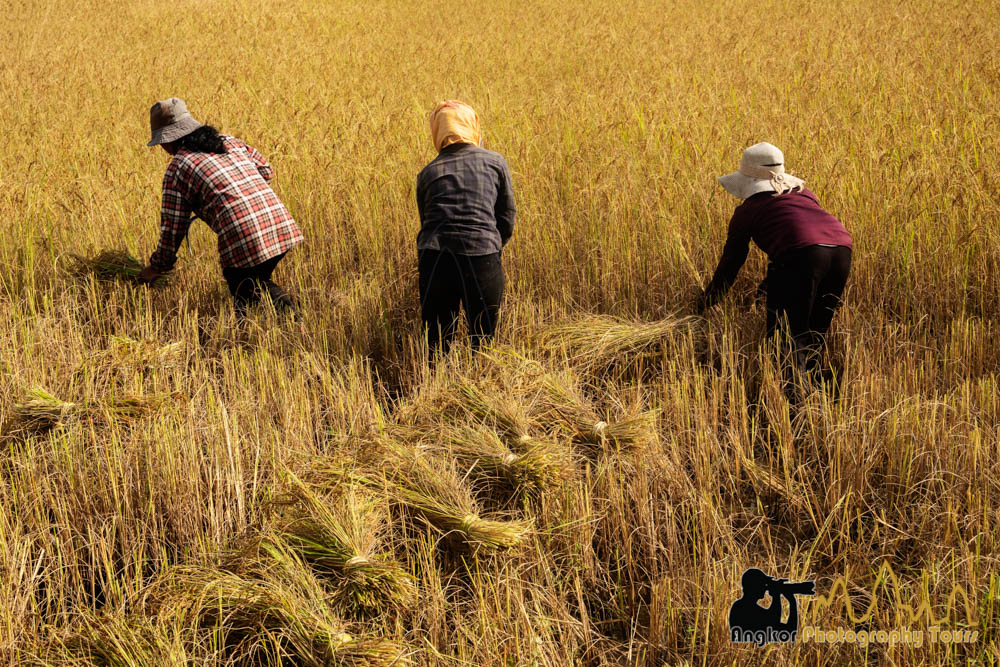
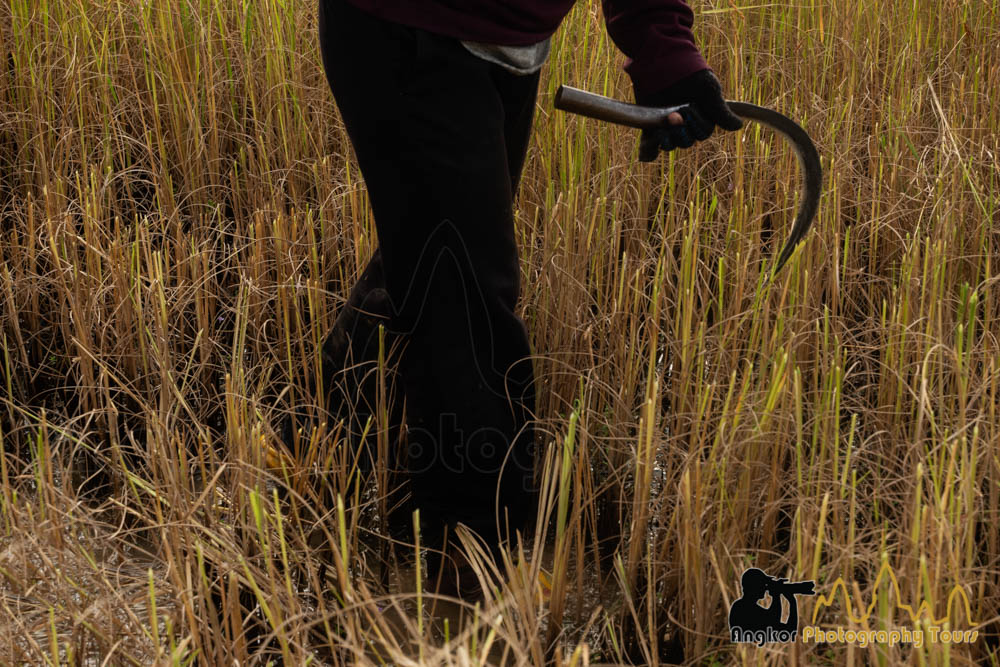
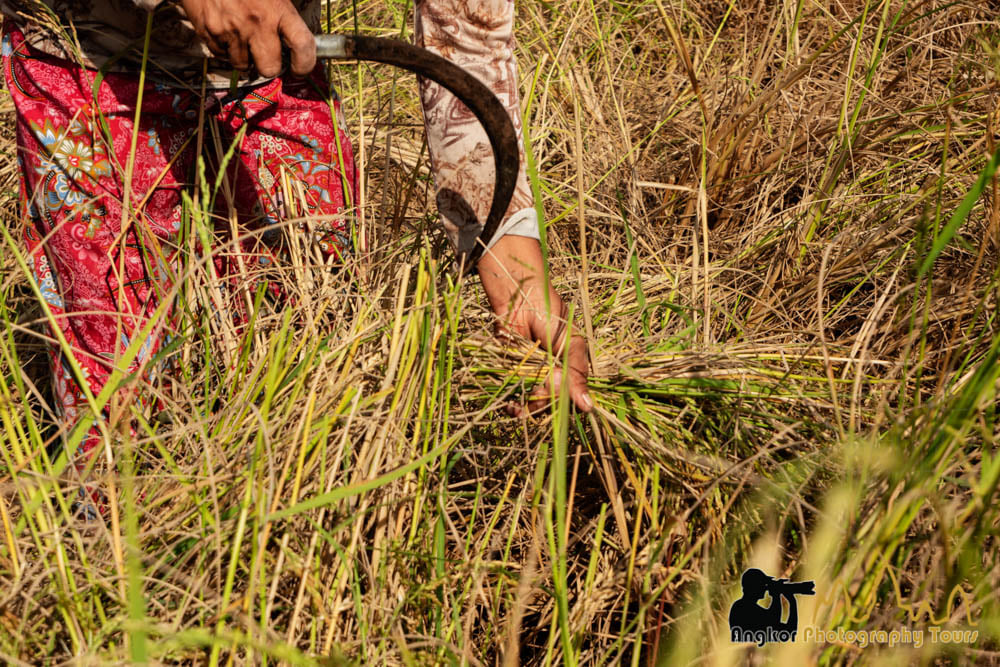
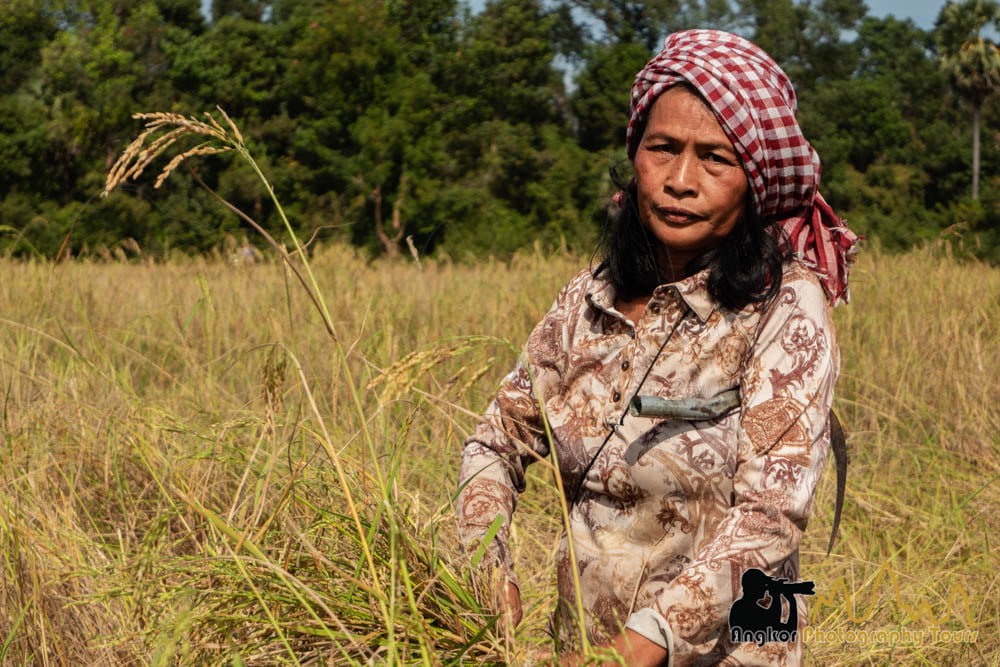
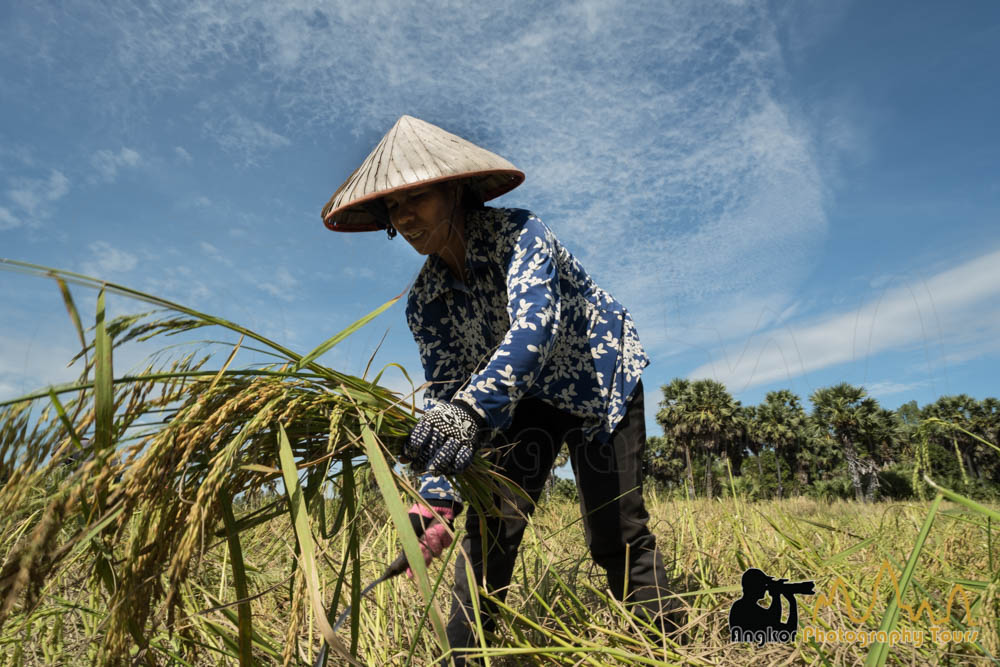
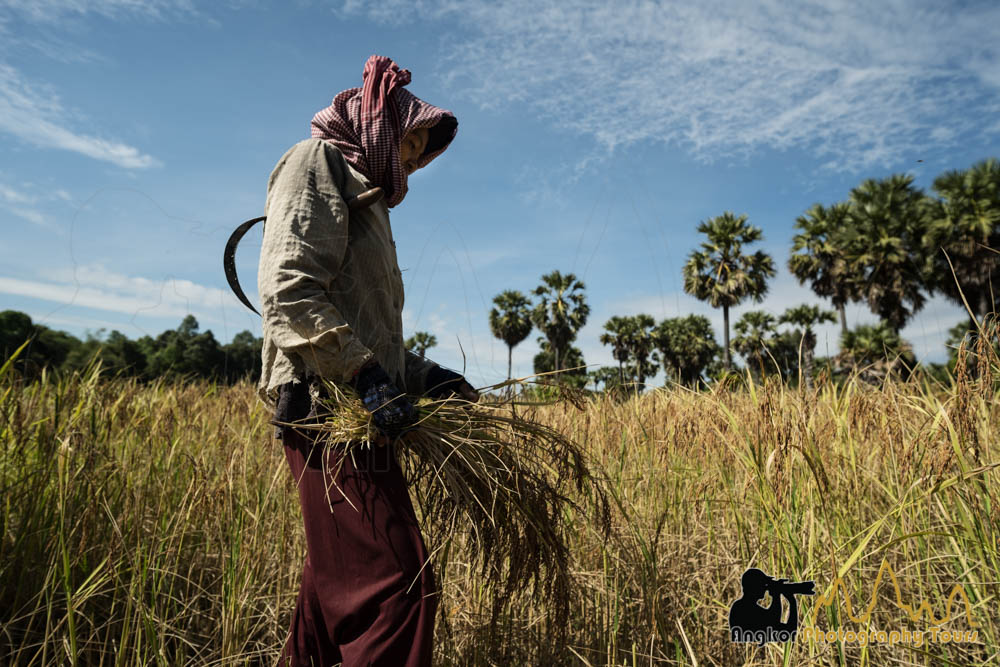
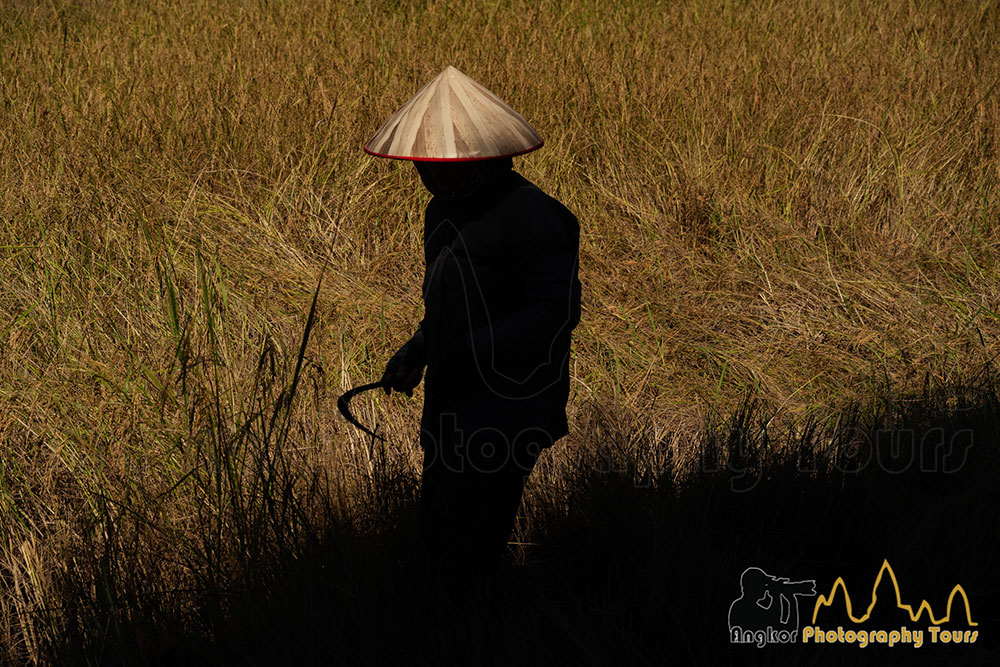
Because of the scorching heat, people often wear hats that can be conical or flat. They also wear long sleeves, pants, scarves, and light fabric gloves, to protect their skin from the sun. If you are lucky, you will find women wearing also the traditional krama around their heads.
RICE HARVESTING CAMBODIA PHOTOGRAPHY
Photography during rice harvesting can be one of the highlights of a photography tour in Cambodia. Although harvest lasts for a relatively short period of time, finding the right locations might not be an easy task if no scouting research was done before. A wide variety of pictures can be captured in the rice fields of Cambodia, time of the day being a critical factor because it will dictate the light and the level of workers’ activity in the paddy fields. You can either get close and personal (be careful as you might get your feet wet!) or stay in the distance with a telephoto lens like a 200 or 300 mm. The pictures where you engage with people are likely to be as well the most rewarding ones. If you are lucky (or if you have a good photography guide) you will spot small groups of Cambodians working in the fields, be prepared to get your feet wet to take your best shots!
RICE HARVESTING CAMBODIA GALLERY | BETWEEN LIGHT AND SHADOW
RICE IN CAMBODIA PHOTOGRAPHY FAQ’s
Battambang was long known as the “bowl of Cambodia,” but since 2020, Prey Veng has become the leading province in rice production.
Yes, Cambodia does export rice. Cambodia is exporting its surplus rice and exports also its premium rice. Production has increased in the past two decades, with a significant surplus exported to Europe. However in recent years, Cambodia exported more and more milled rice to China which is now the largest market for export.
Cambodia has typically two rice crops in a year which corresponds to one harvest in December and one in January-February.


